PDF Download
 PubReader
 Export Citation
 Email the Author
 Share Facebook
 Share Twitter
 Cited by 0 Article
 Metrics (View:2,322)






1. 서론
인간-기계 인터페이스(HMI) 분야에서 사용자의 근육 활동을 정밀하게 측정하고 해석하는 기술이 필수적인 요소로 부상하고 있으며, 그중 고밀도 표면 근전도(HD-sEMG)는 손 제스처 인식 및 근육 기반 제어를 위한 핵심 생체 신호로서 활발히 연구되고 있다 [1–3]. 이러한 웨어러블 인터페이스를 안정적으로 구현하기 위해서는 신축성 소자를 위한 기하학적 엔지니어링 설계와 전도성 소재의 인쇄 공정 기술이 활발히 연구되고 있다[4–6]. 고밀도로 집적된 전극을 갖춘 HD-sEMG 어레이는 근육 활성의 미세한 변화를 공간적으로 구분할 수 있어, 로봇 및 보조 장치의 정밀한 제어를 가능하게 하며 웨어러블 제스처 인터페이스를 구현하는 데 핵심적인 역할을 수행한다.
최근에는 트랜스포머(Transformer) 기반 모델이 HD-sEMG 분석 분야에서도 주목받고 있는데, 이는 셀프 어텐션(self-attention) 메커니즘이 다채널 간의 장기 의존성(long-range dependencies)과 상호작용을 효과적으로 포착하기 때문이다[7–9]. 특히 이미지 기반 학습 패러다임을 채택한 비전 트랜스포머 (ViT)는 HD-sEMG 신호의 공간적 패턴을 유연하게 모델링할 수 있으며, 기존의 CNN과 비교하여 우수한 표현 능력(representational capacity)과 일반화 성능을 입증하였다.
대부분의 상용 HD-sEMG 전극은 젤 기반의 습식 구조를 채택하여 초기에는 낮은 접촉 임피던스를 제공하지만, 젤 건조, 피부-전극 임피던스의 변동, 피부 자극 등으로 인해 웨어러블 또는 장기 사용 환경에서는 성능 저하를 겪는다[10–13]. 그러나 더 중요한 점은, 일반적인 전극 배치가 전완 근육의 해부학적 배열을 반영하지 못한다는 데 주요한 과제가 있다는 사실이다. 기존의 연구들은 주로 균일한 그리드 형태나 반복적인 기하학적 패턴을 채택하여 왔으나[14,15], 이러한 구조는 전완 근육군의 공간적 구성과 활성 특성을 제대로 포착하지 못하며, 이는 신호 효율성과 제스처 분류 성능을 제한하는 요인이 된다. 신호 대 잡음비(SNR), 근육 활성의 분리도, 채널 간 안정성과 같은 다채널 HD-sEMG의 주요 성능 지표는 피부-전극 계면 특성뿐만 아니라 전극 배치가 하부 근육 구조와 얼마나 잘 일치하는지에 따라 달라진다. 따라서 웨어러블 HD-sEMG 시스템의 성능을 근본적으로 향상시키기 위해서는 젤이나 외부 점착제 없이도 안정적으로 부착될 수 있으면서, 동시에 해부학적으로 최적화된(근육 정보를 반영한) 채널 배치를 용이하게 하는 공정방법과 이를 적용한 전극을 개발하는 것이 필수적이다.
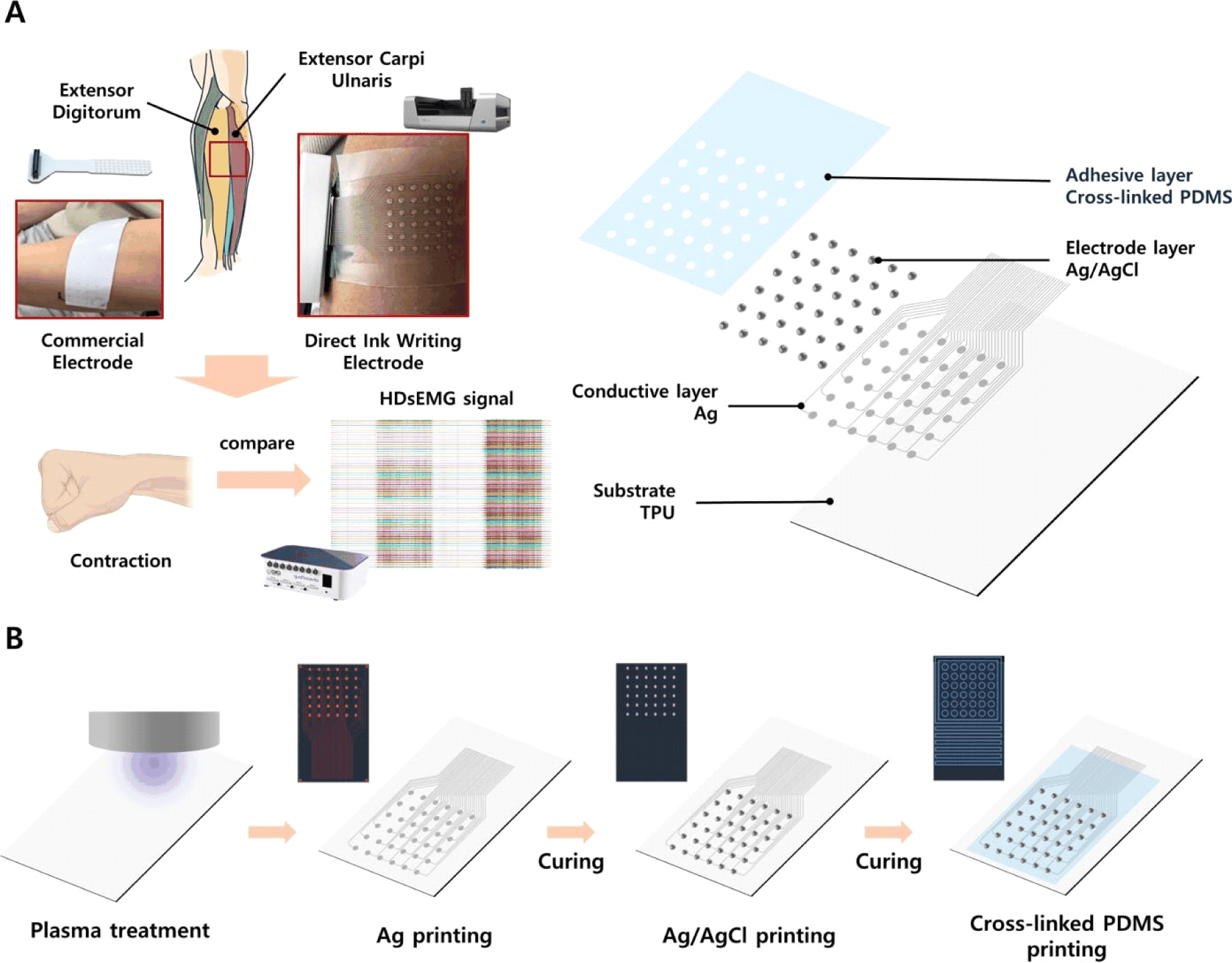
본 연구에서는 Fig. 1(a)과 같이 직접 잉크 쓰기(direct ink writing, DIW) 공정을 이용하여 제작된 무-젤(gel-free), 자가 점착성(self-adhesive), 고신축성(highly stretchable) 36채널 HD-sEMG 전극 어레이를 제안함으로써 이러한 요구사항을 해결하고자 한다. 또한 상용 전극에서 수집된 활성 히트맵을 사용하여 주요 전완 근육 영역을 정의하고, 이에 대응하는 근육 기반 서브셋(subsets)을 구성하여 전완 근육의 위상(topology)을 반영한 맞춤형 채널 레이아웃을 설계하였다. 이러한 해부학적 정보 기반의 채널 그룹을 CNN-Vision Transformer(ViT) 모델의 입력으로 사용했을 때, 제안된 프레임워크는 제스처에 대해 평균 92.2%의 정확도로 분류할 수 있었다.
2. METHODS
본 연구에서 사용된 모든 잉크의 프린팅 공정은 상용화된 dispenser-based ink writing 시스템(NOVA, Voltera)을 이용하여 수행되었으며, 각 기능층(functional layer)은 동일한 TPU 기판 위에 순차적으로 적층 프린팅하였다. 프린팅 품질을 극대화하기 위해 전체 공정은 Fig. 1(b)에서 볼 수 있듯이 표면 플라즈마 처리(plasma surface treatment), direct ink writing, 그리고 경화(curing)의 3단계로 구성하였으며, 각 잉크의 유변학적 특성에 맞춰 공정 파라미터를 개별적으로 최적화하였다.
Conductive Interconnect layer는 stretchable silver ink(SS1109, ACI Materials)를 사용하여 형성하였다. 프린팅 전, 기판의 표면 에너지를 높여 잉크의 젖음성(wettability)을 확보하고 trace의 형상 안정성을 확보하기 위해 TPU 기판에 O2 플라즈마 처리를 수행하였다[16]. 플라즈마 처리는 30 W의 출력과 30 sccm의 산소 유량 조건에서 10 초간 진행되었으며, 이는 silver ink가 기판 표면에 균일하게 퍼지면서도 설계된 라인 폭을 유지하기 위한 최적의 전처리 조건으로 설정되었다.
프린팅 공정 최적화를 위해 플라즈마 처리 유무, 인쇄 속도, 그리고 토출 압력을 독립변수로 설정하였으며, 이에 따른 선폭의 변화와 단절 및 형상 변형 발생 여부를 평가 지표로 삼았다. Stretchable Ag ink는 별도의 희석이나 가열 없이 사용하였고, 노즐-기판 간격(stand-off distance)은 80 µm로 고정하였다. 최적화 과정을 통해 목표 선폭인 200 µm를 균일하게 구현하고 구조적 결함이 발생하지 않는 속도 및 압력 구간(process window)을 도출하여 실제 제작에 적용하였다. 프린팅된 conductive traces는 80℃에서 30분간 열경화를 수행하여 구조적·전기적 특성을 안정화하였다.
EMG electrode layer는 피부와 직접 접촉하여 생체 신호를 수집하는 층으로, 의료용 안전성이 확보된 Ag/AgCl ink(124-36, Creative Materials)를 사용하였다. 해당 잉크는 conductive layer 위에 3D dome 형태로 적층 인쇄되어 절연층보다 높이 돌출되어 있어 전극-피부간 접촉을 도와 접촉 임피던스를 낮추도록 설계되었다. 전극 형상 설계를 위해 상용 HD-sEMG 전극(GR4MM1305, OT Bioelettronica)의 전극 규격을 참고하여 다양한 타원 치수에 대한 프린팅 테스트를 수행하였다. CAD 설계 치수와 실제 프린팅 결과 간의 편차를 고려하여, 목표 전극 크기와 4 mm 전극 간 간격을 침범하지 않고 안정적으로 구현할 수 있는 최적의 크기를 선정하였다. 최적 조건에서 프린팅된 전극은 80℃에서 30분간 열경화를 진행하였다.
Encapsulation layer는 인터커넥트 라인의 기계적 보호와 전기적 절연을 제공하기 위해 PDMS(Sylgard 184, Sigma-Aldrich)를 기반으로 인쇄하여 제작하였다. 이를 위해 PDMS base에 계면활성제(BYK-DYNWET 800 N, BYK Additives)와 curing agent를 동시에 첨가하였다. Surfactant는 1.6 wt% 조건으로 배합하였으며, curing agent는 PDMS base 대비 10 대 1의 비율이 되도록 계량하여 함께 혼합하였다. 이후, Thinky Mixer (2,000 rpm, 30초×2회)를 사용하여 PDMS base, 계면활성제, 그리고 curing agent가 완전히 균일하게 섞인 encapsulation 목적의 잉크를 제조하였다. Ag/AgCl 돔 전극 자체는 점착성을 갖지 않으므로, 본 연구에서는 surfactant가 배합된 PDMS encapsulation 층을 전극 주변부에 배치하여 피부와의 점착을 제공하도록 설계하였다. 이때 전극-피부 계면에서의 전기적 접촉은 Ag/AgCl 돔 전극이 담당하고, 물리적 부착 안정성은 PDMS 접착층이 담당하는 역할을 통해 착용 중 전극의 탈락 및 접촉 불안정 가능성을 최소화하였다. 인쇄 공정에서는 PDMS의 낮은 점도와 경화 과정에서의 spreading 특성을 고려하여 노즐–기판 간 토출 거리와 토출 압력을 조절하였다. 프린팅이 완료된 encapsulation 층은 상온(room temperature)에서 overnight curing을 통해 완전 경화시켰다.
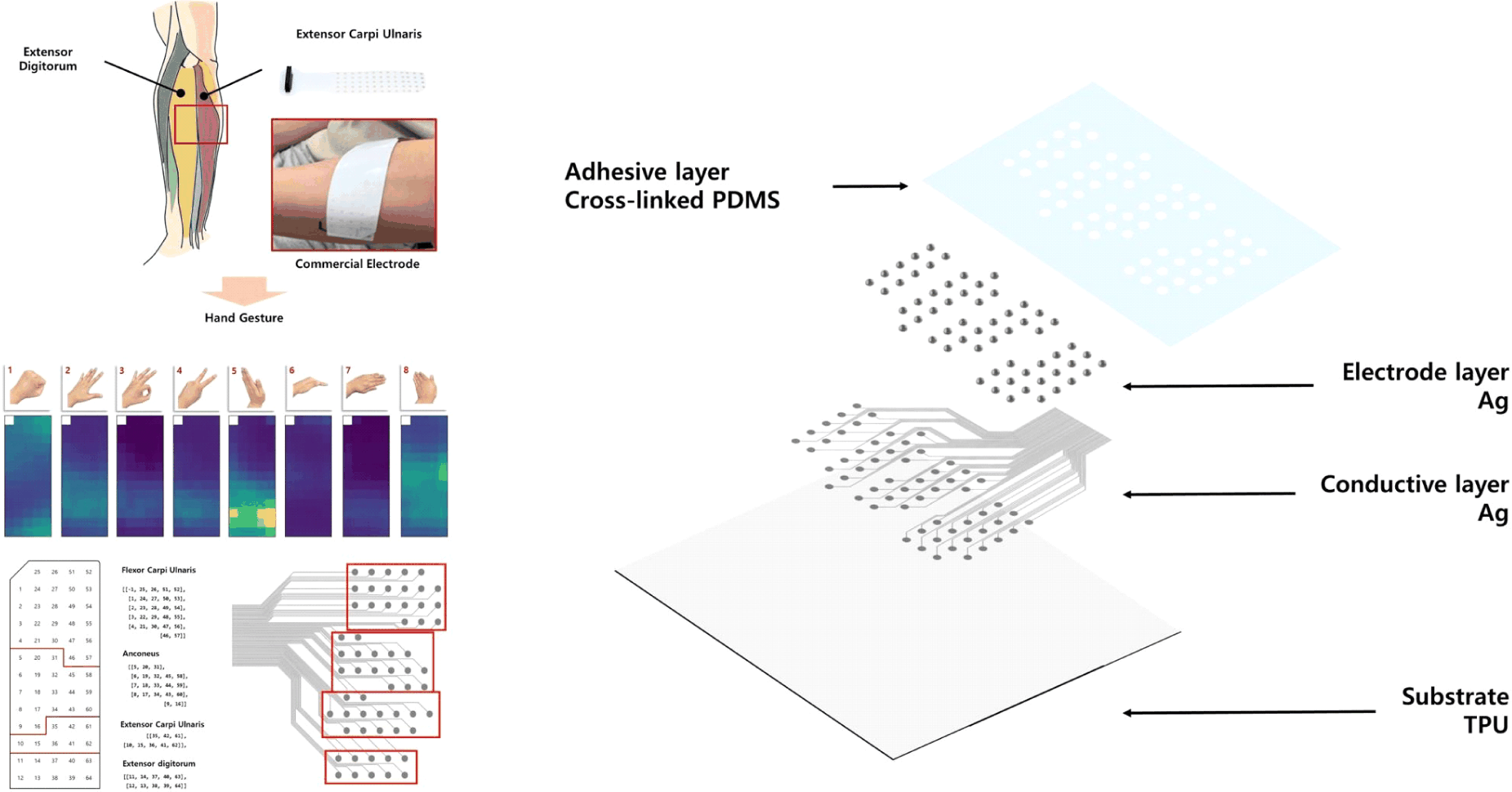
HD-sEMG 신호의 제스처별 근육 활성 분포를 분석하기 위해 히트맵(heatmap) 기반의 표면 근전도 신호 분석을 수행하였다. Fig. 2에서 볼 수 있듯이, 각 채널의 상대적 활성도 강도를 통해 제스처 수행 시 주도적으로 관여하는 근육 영역을 파악하고, 전극 배열 내 근육의 공간적 배치 정보를 평가하기 위함이다. 획득한 히트맵 데이터는 RMS(root-mean-square) 지표를 기반으로 정량화되었으며, 이 분석 결과는 근육 중심의 전극 재배열(muscle-guided layout) 설계를 위한 근거로 활용되었다.
Heatmap calculation RMS 값은 다음 수식을 이용하여 계산하였다.
정확한 활성도 분석을 위해 전체 데이터에서 휴식(rest) 구간과 제스처 수행 구간을 분리하였다. 휴식 상태의 낮은 신호 레벨이 활성 분포 분석을 왜곡하는 것을 방지하기 위해, 실제 제스처 수행 구간만을 RMS 산출에 사용하였다.
데이터셋 수집은 전극 성능 검증과 제스처 분류 모델 학습의 두 가지 목적으로 나누어 진행되었다. 전극 성능 검증용 데이터셋은 direct ink writing을 통해 제작한 36채널 HD-sEMG 전극과 상용 전극(GR04MM 1305, OT Bioelettronica)의 성능 비교를 위해 수집되었다. 피험자가 두 전극을 차례로 착용하고 30%, 60%, 100%의 힘(MVC)을 인가했을 때의 신호를 획득하여, SNR 분석을 위한 데이터로 활용하였다. 제스처 분류용 데이터셋의 경우 64채널 상용 전극(GR08MM1305, OT Bioelettronica)을 사용하여 수집되었다. 본 실험에서는 손가락의 움직임과 손목의 방향성을 고려하여 다음의 8가지 제스처를 선정하였다.
8가지 손 제스처에 대해 5초 유지 – 5초 휴식을 60%의 MVC에 대하여 30회 반복 수행하였으며, 데이터는 2,048 Hz의 sampling rate로 수집되었다. 수집된 신호는 band-pass filter로 10–500 Hz 로 전처리하였다.
HD-sEMG 신호의 공간적 특성과 근육 구조적 정보를 효과적으로 학습하기 위해, CNN과 vision transformer(ViT)를 결합한 Multi-stream CNN-ViT Architecture를 Fig. 3과 같이 설계하였다[9]. 본 모델은 2D 이미지 패치 처리에 최적화된 기존 ViT 구조를 1D 시계열 신호인 sEMG 특성에 맞게 재설계한 것이다.
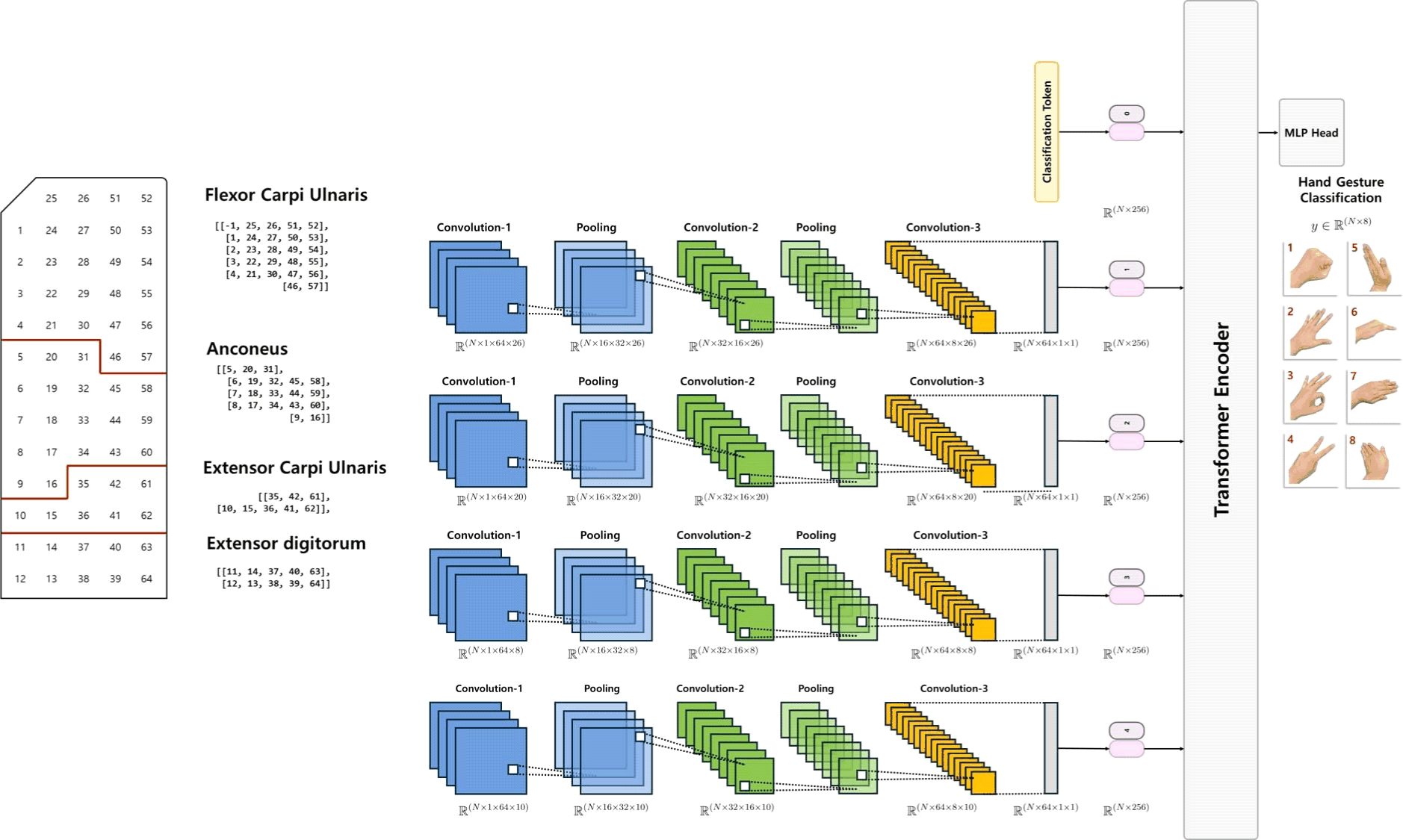
모델의 입력 처리 단계에서는 기존의 patch tokenization 대신 근육 기반 스트림 분리(muscle-based stream splitting) 방식을 적용하였다. 64채널 신호를 해부학적 위치와 근육 활성 시너지를 기준으로 4개의 서브 스트림 Sm(m=1, 2, 3, 4)으로 재구성하여, 각 스트림이 특정 근육군의 정보를 포함하도록 하였다. 분리된 각 스트림은 개별적인 CNN backbone(fCNN)에 입력되며, 2D convolution kernel을 통해 시간축의 지역적 패턴(local spatiotemporal features)을 추출하고 이를 임베딩 벡터로 변환한다.
여기서 θm는 각 스트림별 CNN의 학습 파라미터를 의미하며, dmodel은 트랜스포머의 입력 차원을 의미한다.
Vision Transformer Encoder 입력 단계에서는 4개의 스트림 임베딩에 Classification(CLS) token을 결합하여 총 5개의 토큰 시퀀스를 구성하였다. 또한, 각 토큰의 순서 정보를 보전하기 위해 positional embedding을 더하여 인코더의 초기 입력 Z0을 생성한다.
이는 수많은 패치 토큰을 사용하는 기존 ViT와 달리, 추상화된 근육 그룹 단위의 정보를 attention 모듈에 전달함으로써 계산 효율성을 높이고 전역적 상호작용(global interaction) 학습에 집중하도록 설계된 것이다.
Transformer encoder는 깊이(depth) L=2의 구조로, multi-head self-attention(MSA)과 multi-layer perceptron(MLP) 블록을 통해 스트림 간의 상호작용과 결합된 활성 패턴을 학습한다. l번째(l=1, 2) 레이어에서의 연산은 다음과 같이 정의된다.
최종적으로 인코더의 마지막 레이어 출력 중 CLS token에 해당하는 벡터 Zl,CLS를 추출하여 전체 스트림 정보를 통합한 전역 표현(global representation)으로 사용한다. 이를 분류기(fully connected layer)에 통과시켜 제스처 클래스를 예측한다.
이때, Wc와 bc는 출력층의 가중치와 편향이다. 모델의 파라미터 최적화를 위해 손실 함수로 cross-entropy loss를 사용하였다. 배치 크기가 N이고 분류할 제스처 클래스의 개수가 C일 때, 손실 함수 L은 다음과 같이 정의하였다.
여기서는 zi,j번째 i입력 데이터에 대한 모델의 j번째 클래스 로짓 출력값이며, yi는 해당 데이터의 실제 클래스 레이블이다.
3. RESULTS
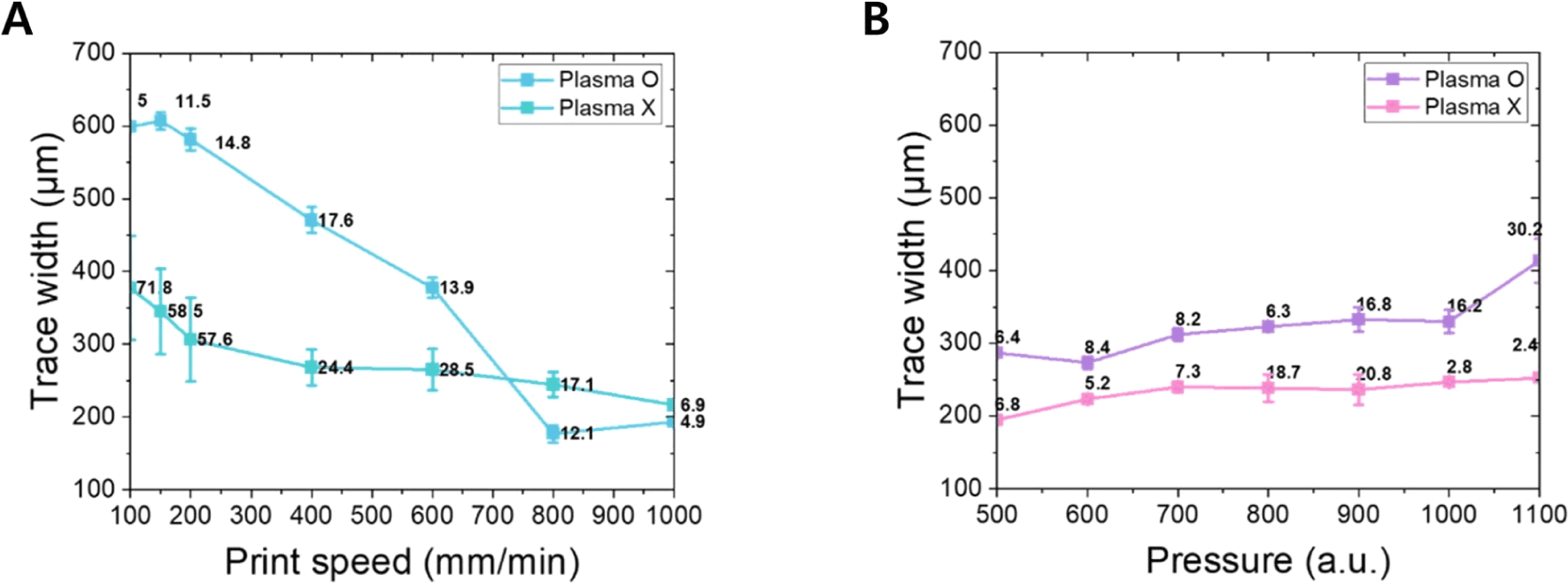
Ag Interconnect 라인의 인쇄 적성 평가를 위해 속도(100, 150, 200, 400, 600, 800, 1,000 mm/min)와 플라즈마 처리 유무를 독립변수로 설정하여 선폭(trace width)과 형상 안정성을 평가하였다. 실험 결과, Fig. 4(a)와 같이 압력이 고정된 상태에서 인쇄 속도가 증가함에 따라 선폭이 감소하는 경향을 보였다. 저속 구간(<200 mm/min)에서는 가장자리가 불규칙해지는 형상 왜곡 및 번짐 현상이 관찰되었다. 반면, 고속 구간 800 mm/min에서는 잉크 공급이 노즐 이동 속도를 따라가지 못해 라인이 끊어지는 현상이 발생하였다. 플라즈마 처리를 한 기판의 경우 플라즈마 처리한 기판보다 동일 인쇄속도에서 선폭의 평균이 27.0% 증가하나, 표준편차의 평균이 55.0% 감소하여 상대적으로 균일한 선폭이 인쇄되는 것을 확인하였다(Fig. 4(b)).
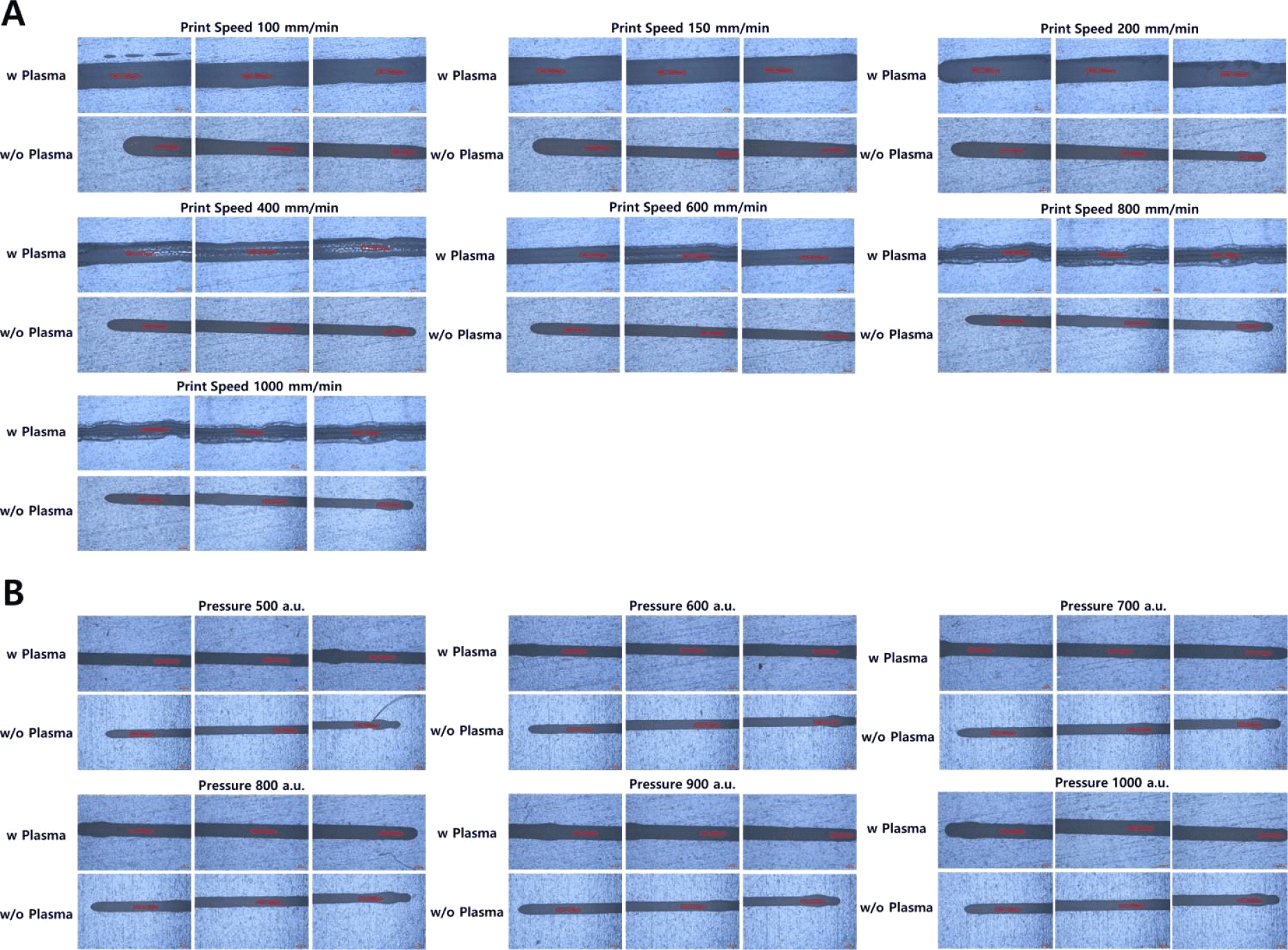
영향을 분석한 결과, 플라즈마 처리를 수행한 경우 기판의 hydrophilic한 특성이 증가하여 trace width는 증가하나 간격의 균일성이 증가하는 것을 확인하였다. 플라즈마를 처리한 상태에서 800 mm/min의 속도로 인쇄했을 때, 표준편차가 12.1 µm로 제일 낮으나, 형상 왜곡 현상이 발생하였다.
이어 600 mm/min의 고정된 속도에서 토출 압력(500 a.u.부터 1,100 a.u.까지 100 a.u.씩 증가)과 플라즈마 처리 유무를 독립변수로 설정하여 선폭과 형상 안정성을 확인한 결과(Fig. 5(a)), 플라즈마 처리를 하고 800 a.u.에서 표준편차가 형상 왜곡이나 번짐 없이 6.3 µm로 제일 낮음을 확인하였다(Fig. 5(b)). 최종적으로 플라즈마 처리 조건에서 인쇄 속도 600 min/mm, 토출 압력 800 a.u. 조건을 최적 공정 파라미터로 선정하였다.
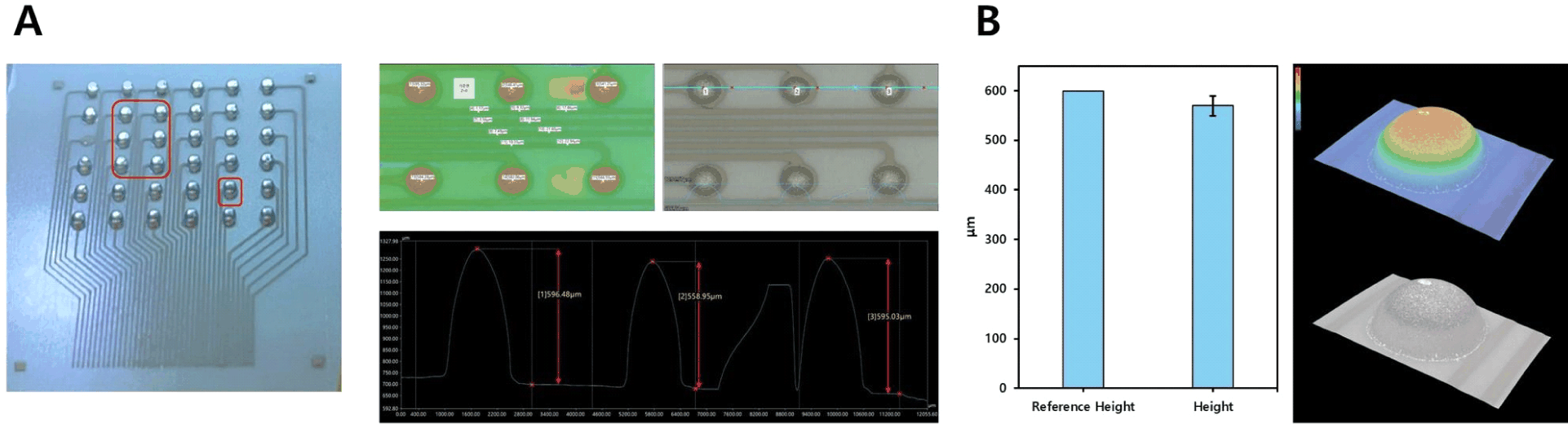
피부와의 접촉 면적을 극대화하고 접촉 임피던스를 낮추기 위해, Ag/AgCl electrode layer는 Fig. 6(a)와 같이 평면이 아닌 3D dome 구조로 제작하였다. 이를 구현하기 위해 Nozzle height를 Nozzle diameter인 150 µm 대비 일반적인 높이(90–120 µm)보다 높은 600 µm로 설정하여 인쇄하였고 높이를 측정한 결과, 그림 6b과 같이 569±22 µm 정도임을 확인하였다[17]. 이는 PDMS 절연층 두께보다 더 높은 값으로, 절연층보다 돌출된 Ag/AgCl EMG 전극이 제작될 수 있음을 의미한다. PDMS layer는 경화 전 낮은 점도로 인해 기판 상에서 넓게 퍼지는 특성을 보였다. 이러한 유변학적 특성으로 인해 conductive interconnect trace와 같이 정량적인 선폭 제어 및 통계적 수치화에는 한계가 있었다. 하지만 정밀 패터닝이 필요하지는 않은 절연층 특성상 앞서 인쇄한 Ag interconnect line를 보호하는 절연층 형성에 충분한 특성이었다.
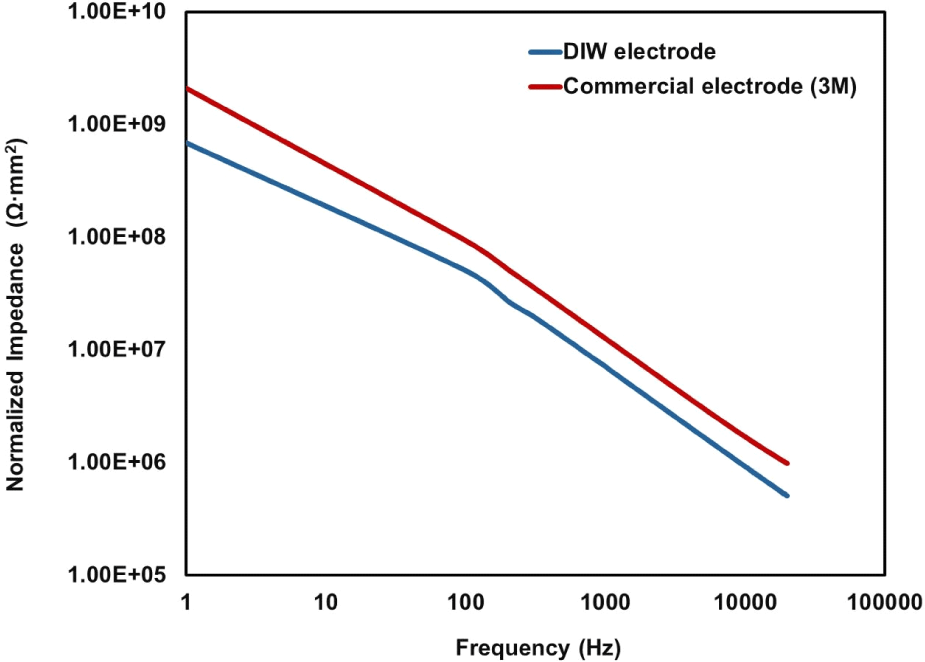
EMG 전극의 성능을 평가하기 위해서 상용 전극(3M, EKG Monitoring Electrode 2223H)과 전극의 임피던스를 동일한 EIS 조건에서 비교하였으며, 비교지표는 전극 면적 차이를 보정하기 위해 임피던스 크기 |Z|에 유효 접촉 면적 A를 곱한 면적 정규화 임피던스 |Z|·A의 Ω·mm3로 산출하였다. EMG 전극은 지름 3.5 mm working 전극과 지름 3.5 mm reference 전극을 전극 중심 간 거리 8 mm로 배치한 구성에서 두 전극 사이 |Z|를 측정하였고, 전극 유효 면적은 지름 3.5 mm 기준 A=9.62 mm3를 적용하였다. 상용 전극은 16 mm ×16 mm 하이드로겔을 포함한 Ag/AgCl 전극을 사용하여 동일 방식으로 |Z|를 획득하였고, 유효 면적은 A=256 mm2를 적용하였다. 각 조건의 임피던스는 동일 시간점에서 5회 반복 측정한 뒤 그 평균값으로 산출하였다. 비교 결과, Fig. 7과 같이 전 주파수 대역에서 EMG 전극의 |Z|∙A가 상용 전극 대비 낮게 나타났으며, 1 Hz에서 EMG 전극은 6.86×10⁸ Ω·mm3, 상용 전극은 2.10×10⁹ Ω·mm3였고, 100 Hz에서 5.00×10⁷ Ω·mm3 대 9.24×10⁷ Ω·mm3, 1 kHz에서 7.09×10⁶ Ω·mm3 대 1.26×10⁷ Ω·mm3, 10 kHz 부근에서 9.11×10⁵ Ω·mm3 대 1.69×10⁶ Ω·mm3, 20 kHz에서 5.05×10⁵ Ω·mm3 대 9.85×10⁵ Ω·mm3로 프린팅 된 전극이 일관되게 더 낮은 임피던스를 보였다.
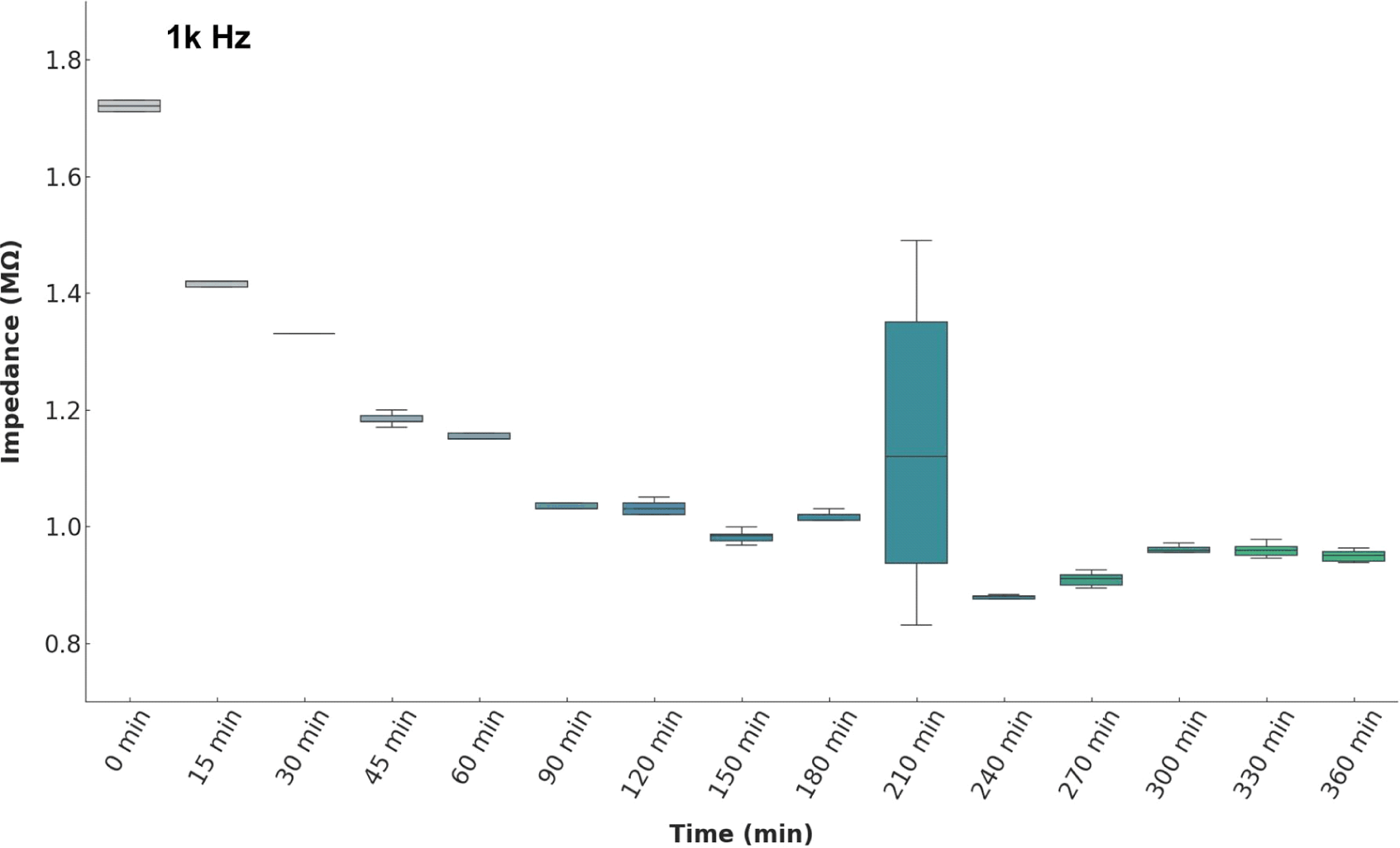
장기간 안정성은 EMG 전극을 6시간 착용한 상태에서 EIS를 반복 측정하여 평가하였다. 전극을 착용한 6시간 동안 격렬한 운동은 제외하고, 일상적인 신체 활동을 수행하였다. 여기에는 실내 공간 내 앉고 일어서기, 타이핑 그리고 보행 등이 포함되어 있어, 신체 움직임이 전극의 부착 안정성에 미치는 영향을 고려하였다. 측정의 정확도를 높이기 위해 매 시간점마다 임피던스를 5회 반복 측정하였다. Fig. 8에서 볼 수 있듯이, 대표 주파수 대역인 1 kHz에서 임피던스는 초기 1.66 MΩ에서 150분 동안 약 0.95–1.02 MΩ 수준으로 안정화되었으며, 이는 피부 수분에 의한 계면 활성화와 PDMS 층의 밀착이 완료되었음을 확인할 수 있다. 대부분의 시간점에서 반복 측정 변동 계수(CV)가 약 1% 수준으로 나타났으며, 이는 6시간의 장기간 착용 중에도 접촉 상태가 기계적으로 안정적임을 시사한다. 장기간 착용 중 앉기, 일어서기, 타이핑, 보행 등의 일상적인 활동을 수행하는 동안에도 임피던스를 반복 측정할 수 있었고, 대부분의 시간점에서 CV가 낮은 수준으로 유지되어 측정이 안정적으로 재현됨을 확인하였다. 즉, 일상 활동 중에도 전극-피부 접촉이 지속적으로 유지되어 신호 획득이 신뢰성 있게 수행될 수 있음을 보여주며, 이를 통해 본 전극의 adhesion reliability를 일상 활동 조건에서 정성․정량적으로 뒷받침한다. 210분 지점에서 관찰된 일시적 임피던스 상승은 이동이나 자세 변화에 따른 일시적 압력 변동으로 판단되며, 해당 활동 직후의 측정값이 이전의 안정 구간으로 복귀하는 양상을 통해 접착층의 물리적 상태가 유지되고 있음을 확인하였다.
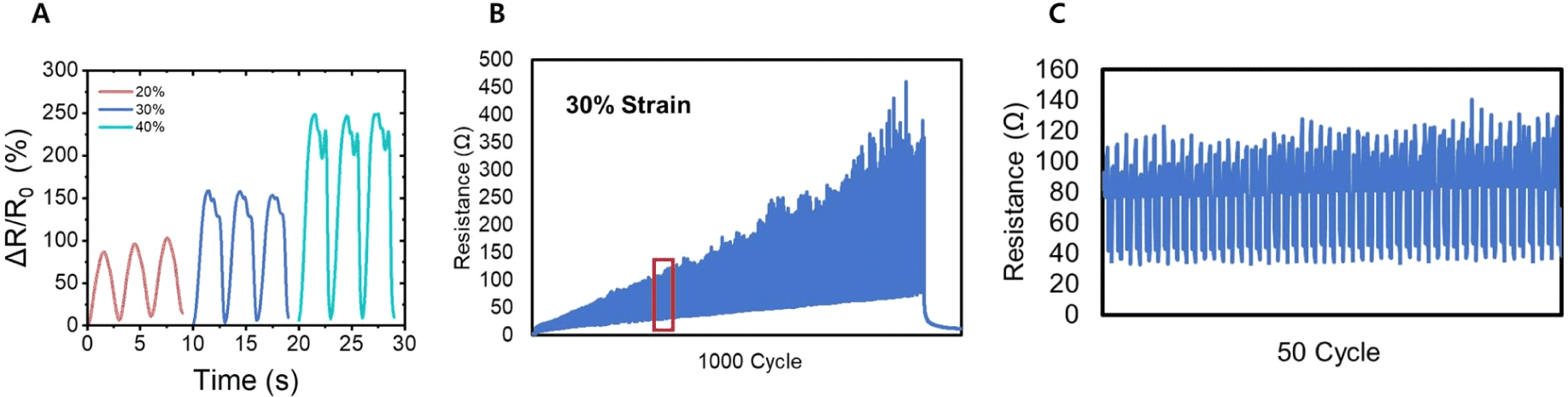
또한 전극 구조 자체의 기계적 변형에 대한 전기적 안정성을 확인하기 위해 인장 시험을 추가로 수행하였다. 본 연구에서는 인장 시험기(ST-ELBS-100)을 사용하여 인장 시험을 진행하였다. Fig. 9(a)와 같이 10%, 20%, 30% 인장을 각각 적용한 결과, 인장힘이 증가할수록 저항 변화율이 선형적으로 증가하는 경향을 확인하였다. 이후 30% 인장을 10 mm에서 13 mm로 변형되는 조건으로 정의하였고, 1 mm/s 속도로 인장-이완을 반복하여 총 1,000 사이클 동안 저항 변화를 관찰하였다. 그 결과 Fig. 9(b)와 9(c) 같이 사이클 진행에 따라 저항이 점진적으로 증가하는 경향은 확인되었으나, 간헐적 접촉 불량과 같은 치명적인 실패는 관찰되지 않았다. 또한, 반복 사이클이 연속적으로 진행되는 동안에 충분한 회복 시간이 확보되지 않아 baseline 저항이 점진적으로 누적되어 상승하는 양상이 나타났지만, 사이클 종료 후 일정 시간 경과 시 저항이 다시 감소하며 부분적으로 회복되는 경향을 확인하였다. 저항은 초기 약 4.85 Ω에서 인장 시험 과정 중 일시적으로 최대 약 460 Ω까지 상승한 구간이 있었음에도 최종적으로 인장 시험 후 약 11–11.85 Ω 수준으로 저항이 감소하며 회복되는 양상이 관찰되어 연속성이 유지되었음을 확인할 수 있었다. 실사용에서 신호 품질을 지배하는 주요 요인은 전극–피부 계면 임피던스이며, 본 시험에서 관찰된 전극 저항 변화는 이에 비해 상대적으로 매우 작은 수준이다. 구체적으로, 인장 시험 중 관찰된 최대 저항 변화는 460 Ω였으며, 이는 1 kHz 기준 전극–피부 계면 임피던스인 1.66 MΩ 대비 약 0.028% 수준이다. 따라서 관찰된 저항 변화가 EMG 신호 측정에 영향을 주지 않는 수준으로 확인된다.
최종적으로 제작된 전극의 생체 신호 측정 성능을 검증하기 위해, Fig. 10(a)와 같이 피험자의 피부에 전극을 접착하고 30%, 60%, 100% MVC 조건에서 sEMG 신호를 획득하였다. 그림 10b의 SNR 분석 결과, 제작된 전극(printing)은 상용 전극(commercial) 대비 전반적으로 유사하거나 조건에 따라 조금 향상된 신호 품질을 보였다.
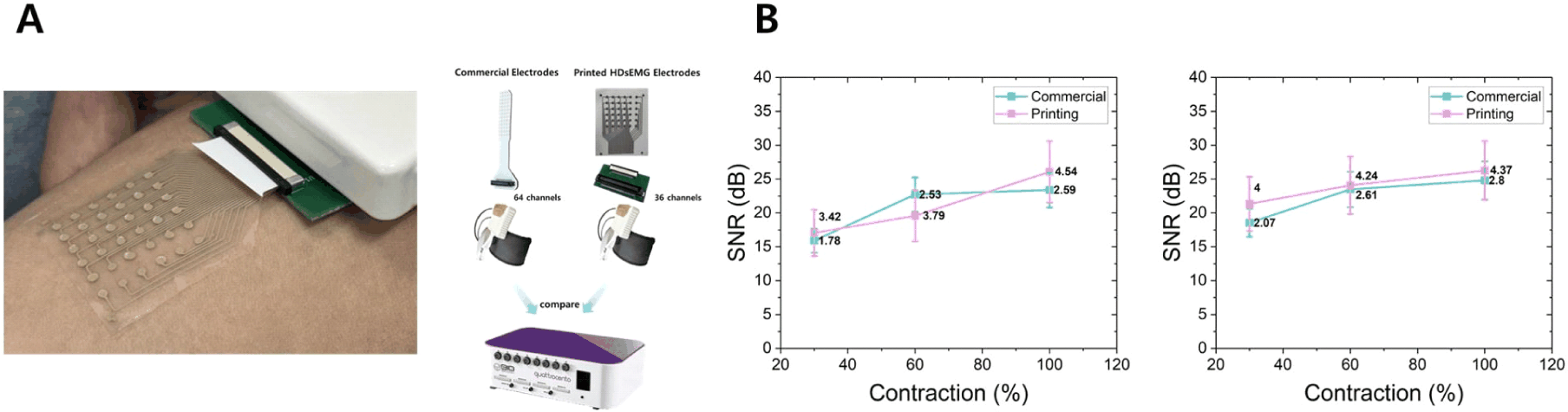
구체적으로 30% MVC의 저강도 수축 시 상용 전극은 15.91–18.55 dB를 기록한 반면, 프린팅 전극은 17.06–21.34 dB를 나타내어 미세한 신호 포착 능력이 우수함을 확인하였다. 또한 100% MVC의 최대 수축 조건에서도 상용 전극(23.40–24.81 dB) 대비 프린팅 전극은 26.07–26.26 dB를 달성하여, 약 1.2–2.6 dB 더 높은 신호 대 잡음비(SNR)를 기록하였다. 결과적으로 실제 제스처 측정 환경에서 문제가 없음을 확인하였다.
본 연구에서는 8가지 제스처(주먹 쥐기, 손 펴기, OK 사인, V 사인, 손목 신전, 손목 굴곡, 손목 요측 편위, 손목 척측 편위) 수행 시 발생하는 전완 근육의 활성 패턴을 히트맵으로 분석하였다. 실험 결과, Fig. 2에서 확인할 수 있듯이 각 제스처 수행 시 전완 근육의 활성도가 공간적으로 불균일하게 분포함을 확인하였다. 구체적으로 주먹 쥐기(fist clenching) 동작에서는 주로 전완 굴근(flexor) 영역에 위치한 채널들이 높은 RMS 값을 보인 반면, 손 펴기(hand opening) 및 손등 올리기(wrist extension) 동작에서는 전완 신근(extensor) 영역이 주도적으로 활성화되는 양상이 관찰되었다. 이러한 결과는 전완의 모든 영역을 균일하게 커버하는 기존 방식보다, 본 연구에서 제안한 Muscle-guided layout이 각 제스처의 고유한 근육 활성 패턴을 포착하는 데 더 효율적이며, 제스처 분류 정확도 향상에 기여할 수 있음을 시사한다.
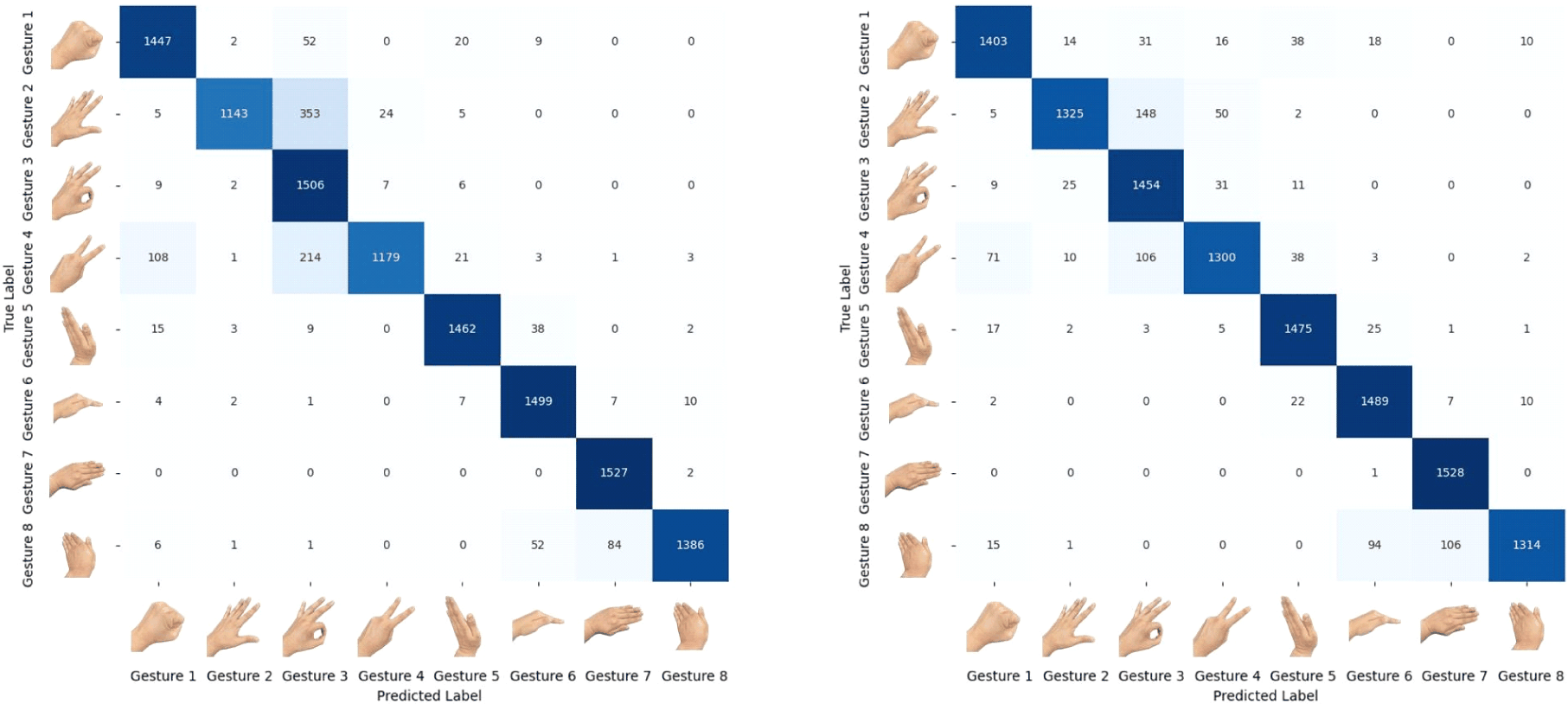
획득한 제스처에 대한 다채널 sEMG 데이터로 기계학습 기반 gesture classification 가능성을 확인하기 위해 CNN+Vision Transformer 모델과 기본 CNN 모델을 적용하였다. 또한, ViT only, CNN only, CNN 과 ViT 결합 그리고 muscle splitting 적용 유무를 조합하여 각 선택의 영향을 독립적으로 비교하였다. 그 결과, Table 1에서 보면 알 수 있듯이, ViT only는 CNN only 대비 전반적으로 낮은 성능을 보였고 제스처별 F1-score를 평균한 macro F1-score 기준으로 no Muscle-split-ViT가 0.82, Muscle-split-ViT가 0.83인 반면 no Muscle-split-CNN은 0.90, Muscle-split-CNN은 0.91로 CNN 기반 모델이 본 데이터셋 및 제스처 태스크 설정에 대해서 더 타당함을 확인하였다. CNN과 ViT를 결합한 경우 정확도는 no-muscle-split-CNN-ViT는 0.92(0.916), muscle-split-CNN-ViT도 0.92(0.923)로 CNN 단독 대비 향상되었고, muscle splitting 유무에 따라서 0.916에서 0.923으로 소폭 증가하는 수준이었다. 다만 본 연구에서 확보된 실험 반복 수와 표본 규모가 제한적이어서 관찰된 차이를 통계적으로 유의미한 개선으로 단정하기는 어려우며, 따라서 본 결과는 각 설계 선택의 효과를 정량적으로 구분해 보여주고자 한다. 나아가 본 실험에서 획득한 표면 근전도 검사는 다양한 손 및 팔 움직임과 연관된 중요한 근전도 전기 신호를 정확히 측정할 수 있음을 의미한다.
4. CONCLUSIONS AND DISCUSSIONS
본 연구에서는 Direct Ink Writing(DIW) 기반 적층 프린팅 공정을 활용하여, 젤(gel)이나 별도의 접착 테이프 없이도 피부에 안정적으로 부착 가능한 고신축성(highly stretchable) HD-sEMG 전극 어레이 제작 공정을 확립하였다. 플라즈마 처리 조건, 은(Ag) 인터커넥트 인쇄 파라미터, 3차원 dome 구조의 Ag/AgCl 전극 설계, 그리고 계면활성제를 도입한 PDMS encapsulation 층까지 포함하는 3층 구조를 체계적으로 최적화하였으며, 제작된 전극 어레이를 계측기와 직접 연결하기 위한 맞춤형 PCB 및 커넥터 인터페이스를 설계·구현함으로써 실제 측정 시스템에 바로 적용 가능한 하드웨어 플랫폼을 구축하였다.
제작된 DIW 기반 HD-sEMG 전극의 성능을 상용 젤 전극과 비교한 결과, 30%, 60%, 100% MVC 조건에서 측정된 SNR은 전반적으로 상용 전극과 유사한 수준을 보였으며, 조건에 따라 소폭 높은 값을 나타내는 경우도 관찰되었다. 다만 이러한 차이는 제작 방식의 우수성을 단정하기에는 제한적인 수준이며, 중요한 점은 젤과 전도성 크림, 접착 폼 패드 없이도 상용 전극에 필적하는 신호 품질을 확보할 수 있었다는 점이다.
또한 상용 HD-sEMG 어레이로부터 획득한 신호를 기반으로, 전완의 주요 근육 영역을 반영한 muscle-guided 채널 서브셋을 구성하고, 이를 입력으로 사용하는 멀티스트림 CNN–Vision Transformer 기반 제스처 분류 프레임워크를 구현하였다. 실험 결과, 제안된 모델은 Fig. 11과 같이 직접 획득한 다채널 HD-sEMG 신호를 이용하여 손 제스처 인식과 같은 인간–기계 인터페이스 응용에서 높은 정확도로 분류할 수 있음을 확인하였다.
결론적으로, 본 연구는 (1) 인쇄 공정 파라미터 및 3층 전극 구조(Ag 인터커넥트–Ag/AgCl dome–PDMS encapsulation)의 최적화, (2) PCB 설계 및 계측기 연동을 포함하는 DIW 기반 HD-sEMG 전극 어레이 제작 프레임워크를 제시하고, (3) 상용 젤 전극과 동등한 수준의 sEMG 측정 성능과, (4) 머신러닝 기반 손 제스처 분류가 가능함을 실험적으로 입증하였다. 향후에는 본 공정을 근육 형상에 맞춘 맞춤형 레이아웃 설계와 결합하여, 웨어러블 HMI, 재활 훈련 모니터링, 장기 생체신호 감시에 최적화된 muscle-informed HD-sEMG 전극 시스템으로 확장하는 연구가 필요할 것이다.