PDF Download
 PubReader
 Export Citation
 Email the Author
 Share Facebook
 Share Twitter
 Cited by 0 Article
 Metrics (View:2,089)






1. INTRODUCTION
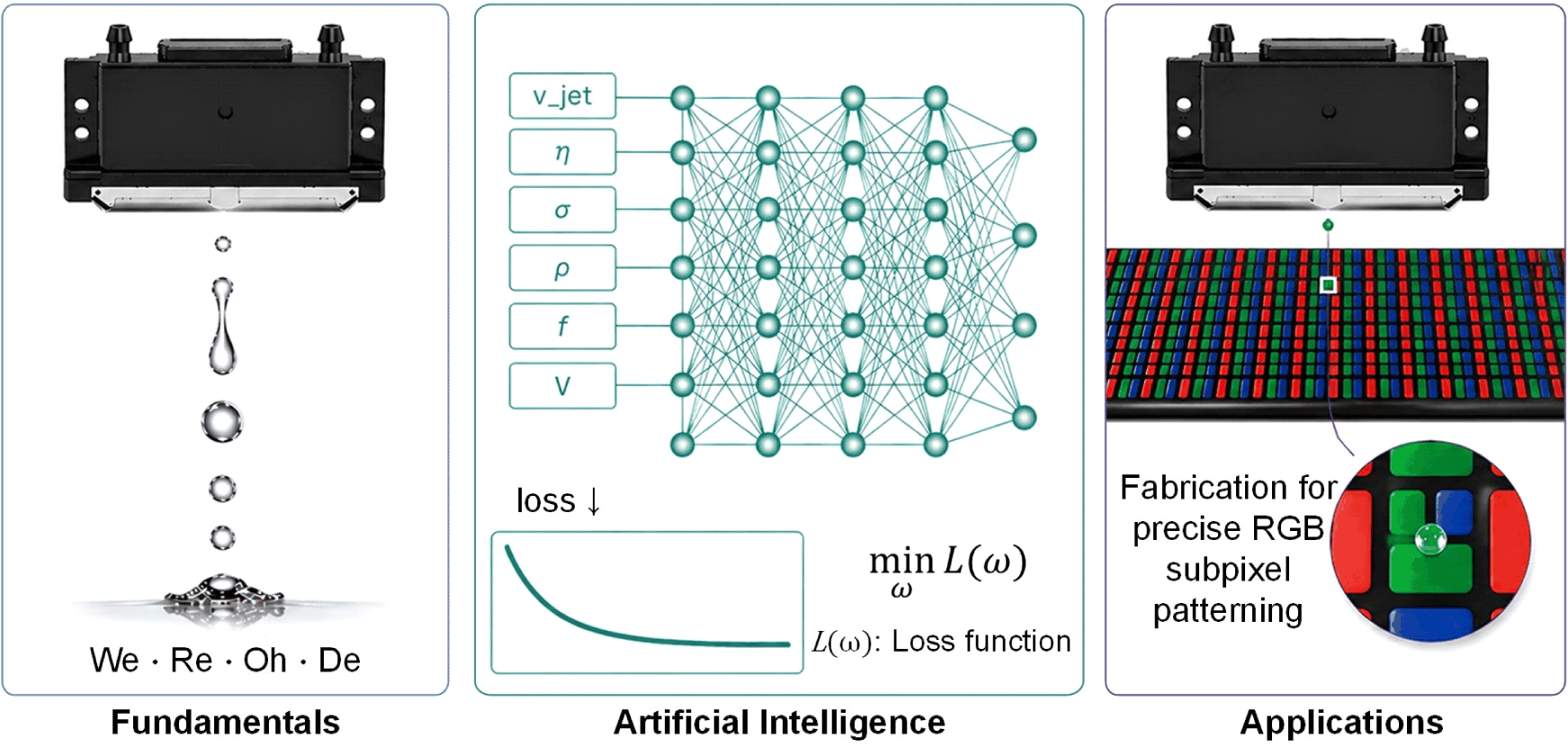
Inkjet printing (IJP) has emerged as a promising additive manufacturing technique, offering non-contact and maskless fabrication of diverse functional materials while significantly reducing material waste compared to traditional processes. In IJP, the picolitre-volume droplets are deposited on the substrate through an array of micro-sized nozzles, which can achieve large area, free form deposition at high throughput mass production. IJP is widely used to pattern the functional materials for electrical devices [1,3], displays [4,6], and wearable devices [7,9].
Despite these advantages across diverse applications, the industrialization of IJP is limited by the complexity of process optimization. The rheological properties of ink, such as viscosity, surface tension, and viscoelasticity, strongly influence jetting behavior [10]. Satellite drop formation deposits functional materials on undesired positions, leading to risks of open or short circuits in printed electronics components. Although a single droplet is deposited on the precise target positions, the evaporation dynamics governs the film morphology. The coffee ring effect during evaporation process promotes non-uniform thickness distribution in functional films, degrading the functionality and reliability of the printed patterns [11]. From jetting to evaporation, the complex optimization process makes it difficult to achieve the consistent reliability required for industrial inkjet applications.
Computational fluid dynamics (CFD) has been widely employed to simulate fluid behavior in various manufacturing processes. In IJP, however, the simulation of jetting behavior is challenging due to the complicated relationships between the ink's rheological properties and the driving waveform. The governing parameters and coupling relationships among these mechanisms remain insufficiently characterized, limiting the predictive accuracy of CFD simulations. Consequently, experimental trial-and-error remains the predominant approach for process optimization, making the IJP development a labor- intensive and time-consuming process.
Recent advances in machine learning offer promising alternatives to conventional trial-and-error approaches by enabling data-driven process modeling and optimization [12]. Machine learning algorithms can identify meaningful patterns within the complicated interplay among numerous process parameters using large experimental data sets, without requiring explicit physical models of the underlying phenomena. In IJP, machine learning techniques have been applied to predict jetting behavior from ink properties and waveform parameters, classify drop morphology in real time, and optimize printing conditions with substantially fewer experimental iterations than exhaustive grid search methods. These capabilities accelerate process development by reducing labor- intensive experiments in IJP.
This review provides a comprehensive overview of machine learning techniques applied to IJP process optimization. We first introduce the fundamentals of machine-learning algorithms utilized in IJP applications. We then present recent advancements in AI-driven printing workflows that demonstrate enhanced process reliability and efficiency, including jetting behavior prediction, droplet morphology classification, abnormal jetting detection, and waveform optimization. Finally, we address the remaining challenges and future directions of machine learning in IJP for industrial applications.
2. OVERVIEW OF DATA-DRIVEN INTELLIGENCE
Machine learning is a branch of artificial intelligence that enables computational systems to learn directly from data without requiring explicitly programmed rules. Unlike traditional rule-based approaches, machine learning algorithms extract hidden patterns from large data sets and construct data-driven models autonomously. These algorithms are broadly categorized into three paradigms: supervised learning, unsupervised learning, and reinforcement learning (Fig. 1(a)).Supervised learning trains a model on labeled data, where each input is paired with a known output, enabling the model to learn the mapping between input features and target variables. Common supervised learning tasks include regression for predicting continuous values and classification for assigning discrete categories. Unsupervised learning, in contrast, operates on unlabeled data and seeks to discover inherent structures or groupings within the data set, with clustering and dimensionality reduction as representative techniques. Reinforcement learning adopts a fundamentally different approach, where an agent learns an optimal decision-making strategy through iterative interaction with an environment, receiving reward signals that guide the agent toward maximizing cumulative long-term outcomes.
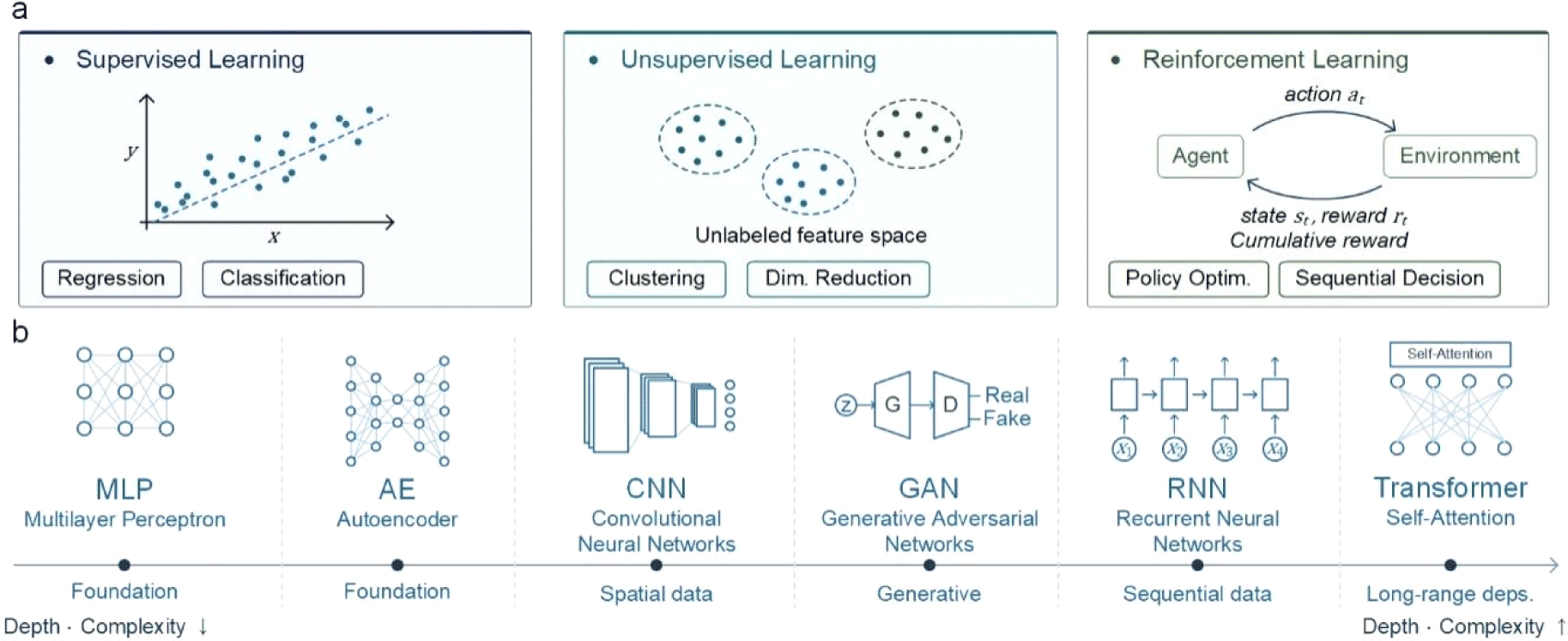
Deep learning extends traditional machine learning by employing hierarchical layers of abstraction to learn data representations directly rather than relying on manually engineered features (Fig. 1(b)). Early architectures such as MLP and Autoencoders established the foundation for layered feature extraction. Convolutional neural networks (CNNs) captured spatial features from image data, later evolving into deep CNN and generative adversarial networks (GAN) for more complex visual tasks. Recurrent Neural networks (RNN) addressed sequential data processing, subsequently advancing through self-attention mechanisms and transformer architectures that enable more efficient handling of long-range dependencies. Deep learning extracts meaningful representations directly from raw data, offering a significant advantage over conventional analytical approaches.
3. AI for Inkjet Droplet Formation
IJP is a drop-on-demand process in which functional fluids are ejected from a piezoelectric printhead as microscale droplets. The piezoelectric actuator generates acoustic pressure waves inside the ink chamber, expelling the ink out of the nozzle. Upon leaving the orifice, the surface tension drives the formation of spherical droplets. The jetting behavior is governed by coupled interactions among inertia forces, free surface deformation, capillary breakup, and viscous dissipation.
Traditionally, the printability of inkjet inks has been evaluated using dimensionless numbers such as the Reynolds number, Weber number, Ohnesorge number, and Z number [13]. The dimensionless numbers provide useful physical insight into the balance between inertial, viscous, and capillary forces. The printable window has often been defined using Ohnesorge or Z number. However, many researchers have proposed the various printable ranges, indicating conventional printable window is insufficient to fully interpret the jetting behavior.
Machine learning builds jetting prediction models using extensive experimental data, capturing correlations between rheological properties and jetting behavior. Kim et al. developed machine learning-based predictive models for IJP by using the Z number of Newtonian inks and waveform parameters as input features [14]. The models predicted two key jetting characteristics: drop velocity and jetting morphology, which was classified into non-jetting, single drop formation, and multiple drop formation. They trained and compared five supervised machine learning models such as support vector machine (SVM), k-nearest neighbors (kNN), Random Forest, extreme gradient boosting (XGBoost), and multilayer perceptrons (MLP), to evaluate their predictive accuracy. Among these models, the MLP model showed the highest accuracy for jetting morphology classification and the drop velocity (Fig. 2(a)). Further studies extended machine learning from droplet velocity prediction to droplet volume prediction [15]. Using voltage driven signal parameters as inputs, a transfer learning model predicted droplet volume and velocity under small sample conditions. Among various machine learning models, two-stage transfer adaptive boosting showed the highest accuracy, demonstrating the value of transfer learning for data limited IJP. In addition to predicting satellite free jetting, another machine learning framework focused specifically on satellite drop formation [16]. The model used single pulse waveform parameters to predict droplet behavior parameters, including pressure peaks, droplet velocity, and droplet mass. Further extending droplet state prediction to electrohydrodynamic (EHD) jet printing, a multi-source data fusion model was developed for femtoliter-scale droplet volume estimation [17]. The model combined process parameters with Taylor cone images, using Visual Geometry Group 16 (VGG16) for image feature extraction and MLP for volume prediction. Nonetheless, capturing the complicated interplay between functional particles and nonlinear fluid dynamics continues to be a bottleneck.
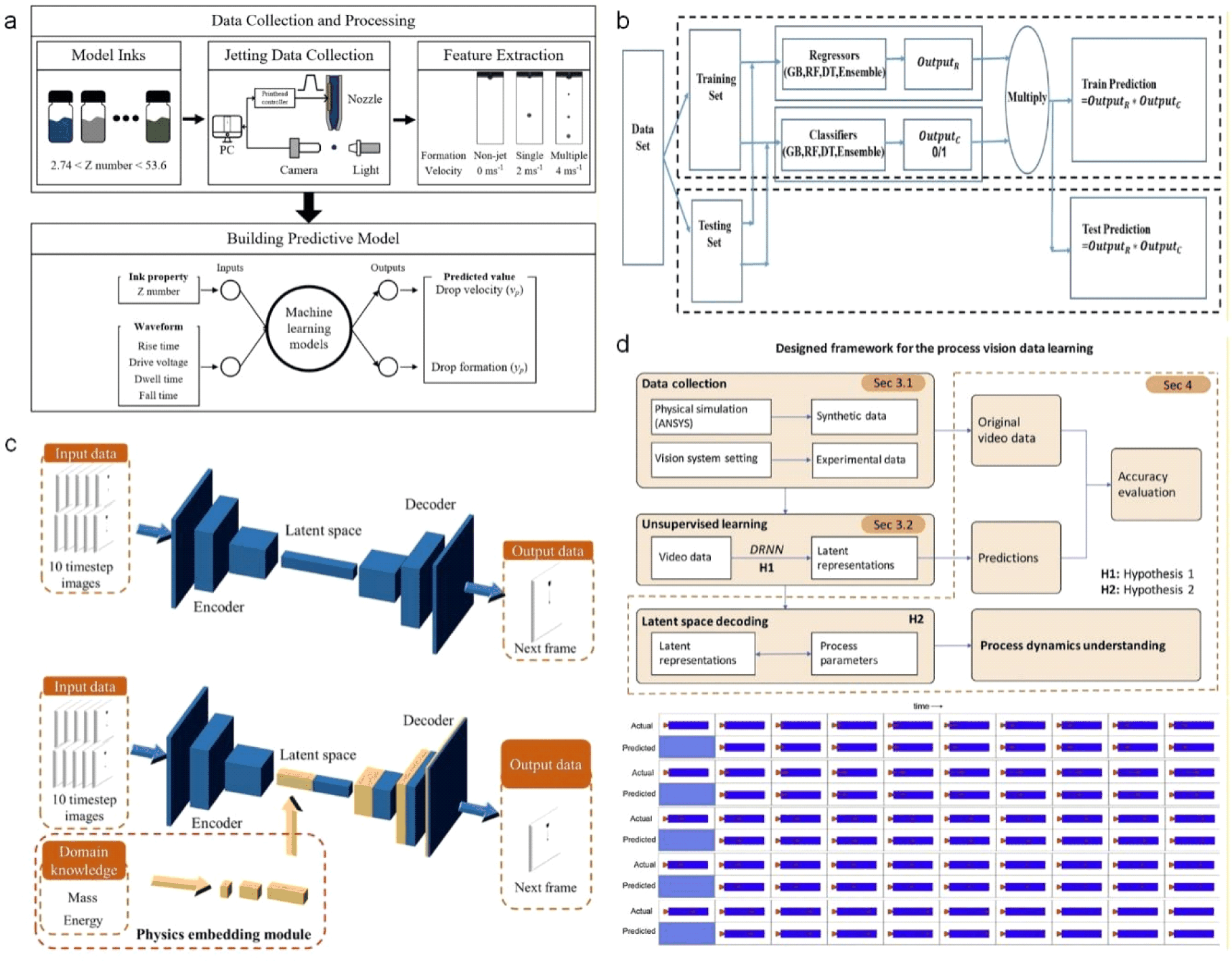
Droplet state of the ink including functional materials has also been predicted using the machine learning algorithm. In inkjet-based bioprinting, ensemble learning models were used to predict droplet velocity and volume from bioink related and process related factors [18]. This study also shows the high accuracy of jetting prediction on the bio inks. For conductive inks used in printed electronics, silver- based ink datasets have been incorporated into machine learning models for jetting prediction [19]. The material properties and printing parameters were used to predict droplet velocity, droplet radius, and jetting regime, including single drop, multiple drop, and non-jetting states. Silver nanoparticle inks with different concentrations were included in the training dataset, and the velocity model was further evaluated using silver nano powder ink data excluded from training (Fig. 2(b)). Rather than predicting the jetting behavior of specific functional inks, understanding their general characteristics is essential. To address this problem, rheology-informed jetting prediction has also been investigated for viscoelastic inks [20]. By analyzing storage and loss moduli with the Maxwell model, the relaxation time and Deborah number were obtained and combined with the Ohnesorge number and waveform parameters as model inputs. Among SVM, B-Tree, and MLP models, MLP showed the best performance in predicting droplet velocity and jetting morphology, highlighting the viscoelastic properties in printability prediction. However, these approaches mostly rely on empirical correlations learned from datasets, with limited incorporation of physics-based information.
Physics-added neural networks (PANNs) have been proposed as an image-based deep learning framework for temporal droplet formation prediction [21]. To improve the physical consistency of image-based droplet prediction, the framework used mass and energy information extracted from sequential CFD generated droplet images. These physical quantities were used to guide neural network training without directly solving multiphase governing equations. Compared with conventional convolutional long short-term memory, PANNs showed faster convergence and improved physical consistency, particularly in multi-step droplet and satellite droplet prediction (Fig. 2(c)). Following this physics-guided direction, a hybrid modeling framework has been used to describe drop formation in IJP [22]. The framework used a third order equivalent circuit model to describe continuous drop growth and average velocity before pinch off. Data-driven correction terms were then introduced to estimate pinch off timing and compensate for changes in in-flight drop volume and jetting velocity. Three different inks showed good agreement between simulations and experiments, introducing that reduced order physical modeling with empirical correction improves interpretable waveform design and droplet control.
In IJP, jetting behavior is captured through sequential images obtained from a high speed monitoring system. Machine learning algorithms have been adopted to predict the video format evolution of inkjet droplets. A DeepRNN-based framework learned latent representations from sequential jetting images and predicted future frames of droplet evolution [23]. The model showed good agreement with both simulation-generated and experimental videos in capturing the temporal evolution of droplet formation. Latent-space decoding further linked the learned representations to material and process parameters (Fig. 2(d)). Extending this video-based view, tensor time-series analysis has been applied to predict droplet evolution under different material and process conditions [24]. Multiple droplet videos were treated as co-evolving time series, allowing shared relationships among jetting sequences to be learned. The Network of Tensor Time Series model combined Tensor Graph Convolutional Network for cross-linked and spatial features with TensorRNN for temporal dynamics, followed by MLP-based future-frame prediction. The predicted droplet evolution agreed well with simulated and experimental videos under both seen and unseen data. The reviews have shown potential of AI technique for predicting jetting behavior, encompassing not only characteristic jetting features but also sequential jetting images.
Predicting jetting behavior allows assessment of printability without actual jetting experiments. However, reliable inkjet printing requires the design of an optimal drive waveform that generates satellite free droplet formation. AI-based inkjet studies have moved from forward prediction models toward waveform optimal design that search the waveform space and recommend suitable parameters for reliable single drop ejection. Reinforcement learning has been used to dynamically search the driving waveform for functional inks [25]. An MLP model estimated drop velocity and jetting morphology from rheological properties and waveform parameters, while a deep Q-network agent manipulated voltage and pulse width to achieve satellite free jetting at a target velocity. The trained agent successfully converges optimal waveform and supported adaptive waveform control under temperature changes in ink properties. In parallel with waveform optimization for stable ejection, deep reinforcement learning has also been adopted to closed loop droplet volume control in industrial OLED IJP [26]. In this framework, offline strategy samples were generated from visual observation data using a stochastic state transition method. A soft actor-critic (SAC) policy, representative model of reinforcement learning, was trained to manipulate peak voltage and dwell time according to droplet volume deviation. During online control, the policy updated waveform parameters based on visual feedback and regulated the droplet volume within ±5% of the target value under industrial disturbances. Reinforcement learning-based waveform optimization has become a key technology for realizing intelligent inkjet printing processes.
While jetting behavior prediction is essential before the printing process, detecting abnormal jetting during the process is also critical for improving the reliability of inkjet printing. Industrial printheads contain many nozzles, and stable jetting from every nozzle is difficult to maintain due to clogging, misfiring, jetting deviation, or unstable droplet formation. Since abnormal nozzles generate pattern defects and yield loss, automatic monitoring systems should screen defective nozzles. To detect abnormal jetting in real time, streaming droplet videos have been analyzed using an online anomaly detection framework [27]. Droplet videos recorded by a vision system were treated as high dimensional tensor data. The online tensor factorization extracted low dimensional temporal features from incoming frames. Bayesian online change detection then monitored these features to capture abrupt changes in droplet behavior without requiring a predefined normal baseline. This approach supports real time nozzle screening, and then early defect prevention in IJP. Extending online anomaly detection toward real time process monitoring, a CNN-based framework has been developed to classify droplet ejection states in IJP [28]. The model used a residual neural network with a translation insensitive linear transform to reduce image size while preserving key droplet features. By analyzing sequential jetting frames, the model distinguished no-droplet, non- spherical droplet, and spherical-droplet states. The accelerated classification framework supports nozzle level monitoring in inkjet systems (Fig. 3(a)).
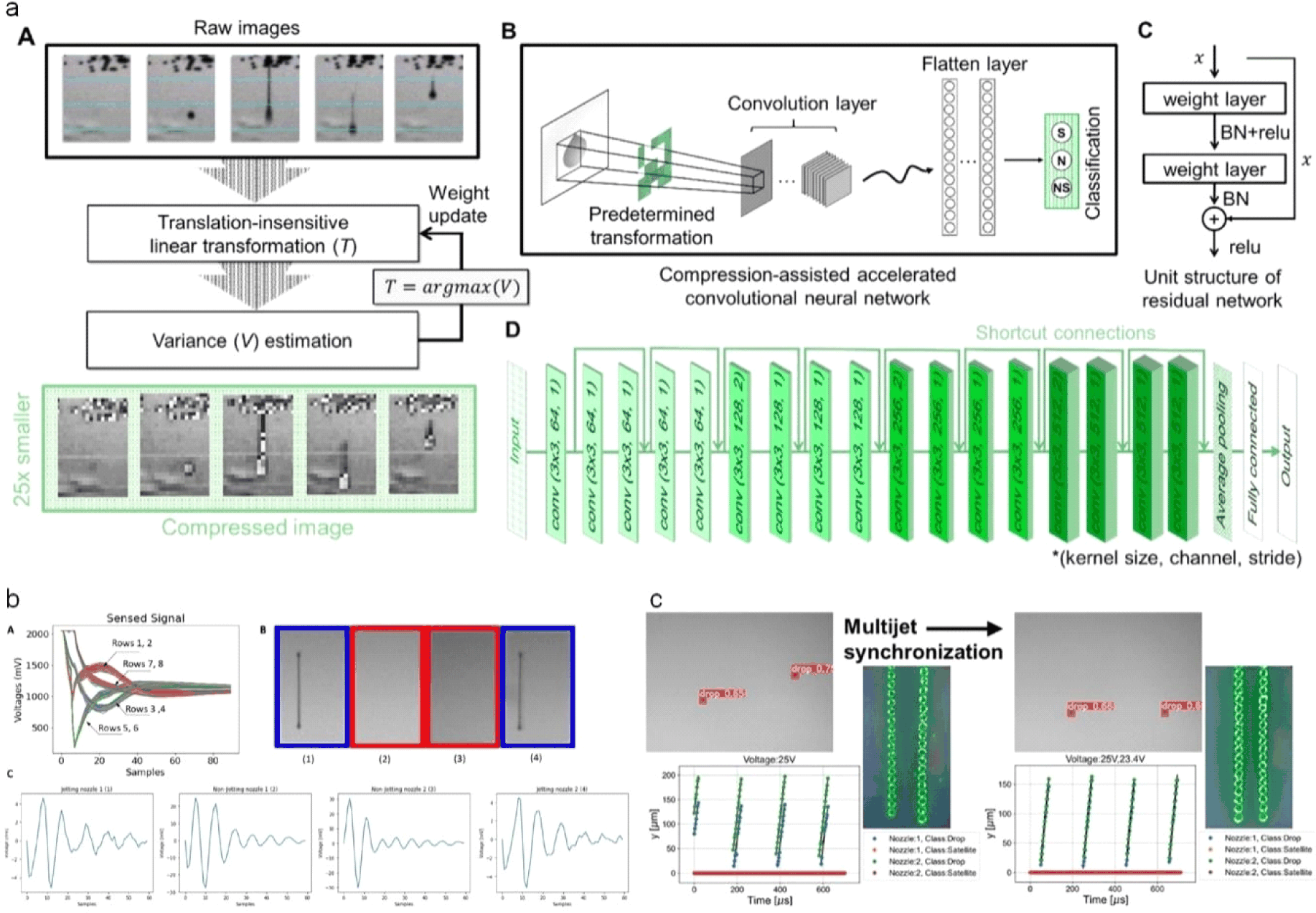
Single nozzle monitoring provides useful information on local ejection states, while industrial IJP requires simultaneous evaluation of multiple nozzles. In multi-nozzle printheads, nozzle to nozzle variation can arise from manufacturing differences. A Mobile NetV2-based CNN framework was therefore developed to classify jetting frames into none, ejection, tail, drop, and satellite states [29]. By accumulating the frame level classifications, the model diagnosed each nozzle as no-jet, stable-jet, or satellite-jet, supporting unstable-nozzle screening in high throughput IJP. AI-driven monitoring has also been developed using piezo self-sensing signals from industrial multi-nozzle printheads [30]. The framework extracted features representing phase and amplitude differences from signals measured by the piezo actuator and used supervised learning models to classify nozzle jetting status. SVM, neural network, and Gaussian naïve Bayes models all achieved classification accuracies above 99.6% in distinguishing normal ejection from failed ejection. A hybrid monitoring strategy further combined classification using piezo sensing signals with selective jet visualization, improving monitoring efficiency and reliability for large nozzle arrays (Fig. 3(b)). Moving from nozzle status monitoring to active jetting control, a YOLOv5 based droplet detection framework was used to characterize and synchronize multi-nozzle ejection [31]. The model detected main drops and satellite droplets from CCD images and converted bounding box coordinates into quantitative jetting parameters, including velocity, diameter, length, and translation. The waveform was manipulated to reduce the variation of droplet velocity between nozzles. After synchronization, the velocity difference between two nozzles was reduced to within 0.05 m/s. Aligned printed patterns were demonstrated using silver nanoparticle and quantum dot inks. The droplet detection using AI converts visual monitoring data into waveform adjustment for multi-nozzle synchronization (Fig. 3(c)).
4. AI for Film Formation
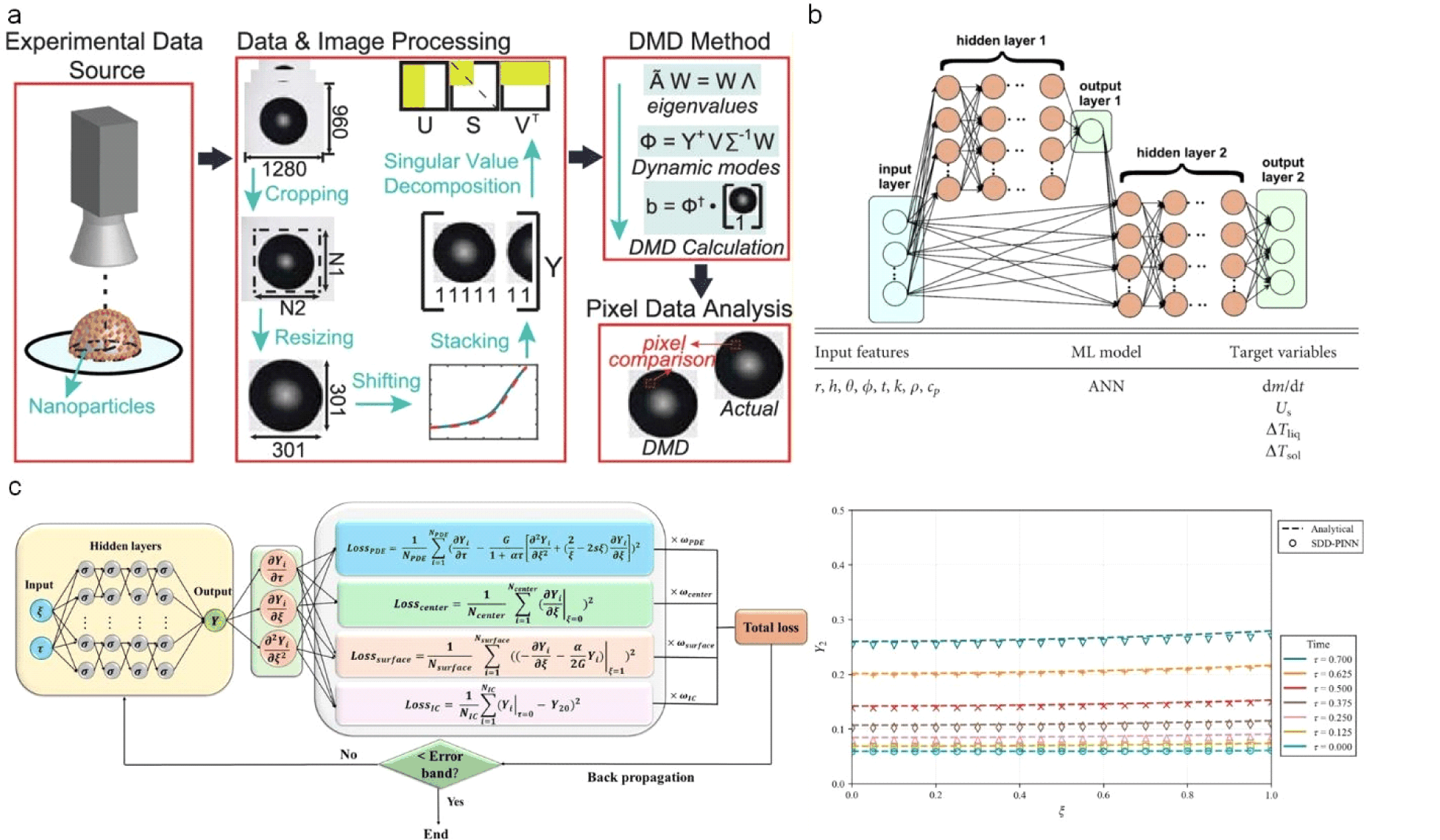
In IJP, the ejected droplet is deposited on the substrate. The solvent evaporation leaves functional materials on the substrate. The evaporation dynamics governs solute redistribution, contact line motion, and internal flow within the deposited droplet, thereby determining the final film morphology. Therefore, AI based prediction of droplet evaporation provides a critical link between evaporation conditions and final pattern quality. For droplet drying prediction, dynamic mode decomposition has been used as a data driven model to predict transient drying patterns of nanoparticle laden droplets [32]. Using the initial 100 s of top view drying images, the model predicted the subsequent 170 s of droplet drying evolution with less than 10% error. It also estimated droplet radius and coffee ring thickness, showing the potential of image based drying models for predicting evaporation behavior and deposition morphology (Fig. 4(a)). Paul & Dhar investigated sessile droplet evaporation kinetics using cascaded deep neural networks and tree-based machine learning models [33]. A validated numerical model generated 600 datasets by varying droplet geometry, relative humidity, and substrate thermophysical properties. The models predicted evaporation rate, internal velocity scale, and temperature drops in the liquid and solid domains. The cascaded structure used the predicted evaporation rate as an additional input to reflect the coupling among evaporation, cooling, and internal flow. Compared with various machine learning models, artificial neural network (ANN) showed the best overall performance with lower computational cost than full numerical simulations (Fig. 4(b)). To improve the physical reliability of droplet drying prediction, SDD-PINN was developed as a physics informed neural network for single droplet drying [34]. The model treated drying as a moving boundary diffusion problem in a shrinking spherical droplet and used the governing partial differential equation, initial condition, center symmetry, and surface mass transfer boundary condition during training. By transforming the moving domain into a fixed coordinate system, the model predicted internal solute concentration profiles across different drying regimes. This study shows that physics aware learning can improve the robustness and interpretability of droplet drying models (Fig. 4(c)).
At the line and pattern scale, AI has been used to predict height profile evolution during sequential droplet deposition [35]. A physics guided Convolutional RNN (ConvRNN) model described the spreading of deposited droplets in inkjet 3D printing. The model also captured interactions between neighboring droplets and the resulting height profile. Its network structure reflected mass conservation, liquid flow between adjacent regions, and shrinkage after curing or evaporation. The process description therefore retained physical constraints and avoided a purely black box formulation. With the physics guided structure, the ConvRNN predicted height map evolution with much less training data than a conventional MLP. In contrast to height profile prediction during sequential droplet deposition, AI has also been applied to device level quality evaluation for inkjet-printed flexible sensors [9]. Droplet morphology and process parameters were used to predict square resistance and to classify whether selected printing conditions could form usable conductive lines. After printing, a neural architecture search-based detection model identified surface defects such as holes, cracks, impurities, and satellite droplet defects in silver electrodes. Line morphology optimization has also been explored through a surrogate model coupled with a genetic algorithm [36]. A validated lattice Boltzmann simulation was first used to build response surface equations that predict printed track width and thickness from drop spacing and contact angle hysteresis. The genetic algorithm then searched the printing and wetting parameter space by minimizing the difference between target and predicted track footprints, represented by normalized central geometric moments. By replacing repeated high fidelity simulations with a fast surrogate model, the framework identified parameter sets for more uniform bead width and thickness. Following line morphology optimization, ANN has also been used to predict the quality of nano silver conductive lines from experimental printing data [37]. The model used platform temperature, printing speed, number of printed layers, and droplet delay time as input variables, and predicted line width, resistance, and line thickness. Full factorial experiments were first conducted to identify the process window for continuous line formation, and the ANN then learned the nonlinear relationship between printing parameters and line quality. Compared with linear regression models, the ANN showed better prediction performance for line width and thickness, although resistance prediction remained more difficult due to irregular line edges.
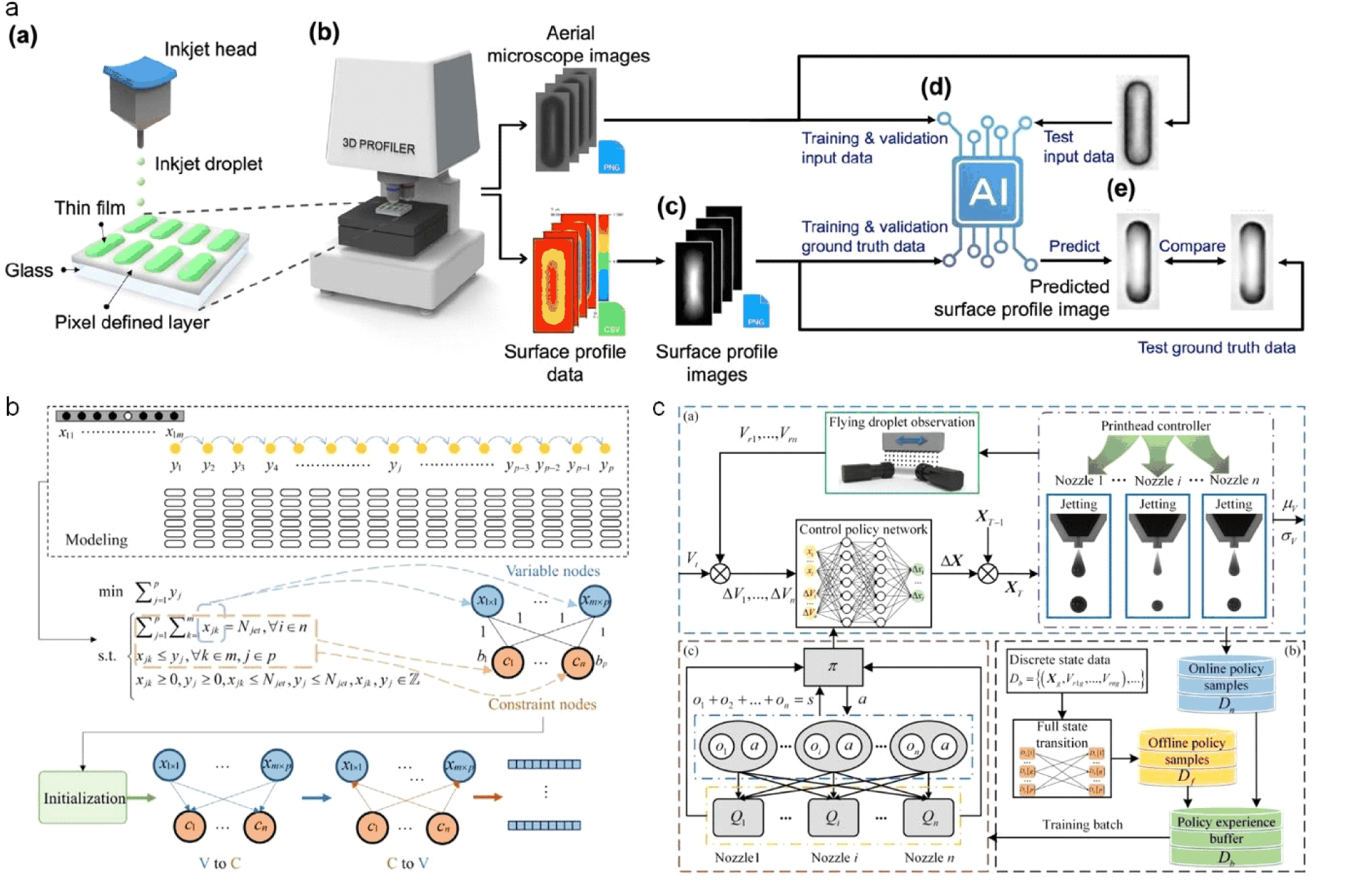
For display manufacturing, IJP deposits functional materials into patterned pixel wells. Unlike line printing, pixel printing confines deposited droplets within sidewall structures, which restrict droplet spreading and modify evaporation and solute redistribution. AI based models have therefore been applied to predict pixel scale film uniformity and defect formation in display printing processes. For OLED pixel films, a model based on U-Net architecture has been developed to predict 3D thin film profiles from aerial microscope images [38]. The approach converted surface profile data measured by a 3D profiler into image labels and trained the model to infer thickness distributions from optical images of inkjet-printed subpixels. By using a tuned loss function that combined mean absolute error and mean absolute percentage error, the model predicted various organic thin film profiles with an average error of approximately 1.3%. The model also demonstrated real time profile monitoring inside a drying chamber, suggesting that AI can evaluate pixel scale film uniformity without direct profilometer measurement during drying (Fig. 5(a)).
5. PERSPECTIVE AND FUTURE PROSPECTS
AI-based optimization shifts inkjet printing from empirical parameter tuning to predictive and feedback driven process design. Integrated models for prediction, monitoring, control, and film formation improve process reliability and final pattern quality. These advances strengthen the role of inkjet printing in display manufacturing. At the manufacturing system level, AI-based optimization is expanding toward intelligent path planning for printed display fabrication. An online patterning planning system combined graph convolutional neural networks with reinforcement learning to select suitable printing algorithms under different printhead and substrate conditions [39]. By considering nozzle configuration, pixel arrangement, spacing, and nozzle masking rate, the system addressed abnormal nozzles and diverse panel resolutions. Validation on a high-resolution substrate showed successful pixel pit filling and clear backlight illumination, indicating improved pixel pattern completeness for reliable display panel fabrication (Fig. 5(b)). For large area OLED manufacturing, AI based process control is moving toward multi-nozzle droplet volume regulation. A multiagent SAC framework was developed to control droplet volume distribution by treating each nozzle as an agent and using visual feedback for online waveform adjustment [40]. The policy network adjusted peak voltage and dwell time according to volume errors from multiple nozzles, reducing nozzle to nozzle volume variation in an industrial printing environment. The mean droplet volume was controlled within ±4% of the target volume, and the standard deviation was reduced to 0.07. Since droplet volume distribution determines pixel film thickness uniformity, this strategy directly supports improved pixel filling consistency and reduced display defect risk in large area OLED panel fabrication (Fig. 5(c)).
| Ref. | AI model | Input | Output |
|---|---|---|---|
| [9] | Neural architecture model | Printed-electrode images | Printed line classification, surface defect detection |
| [12] | Machine learning | In-situ droplet inspection data | Droplet state and control feedback |
| [14] | SVM, kNN, RF, XGBoost, MLP | Z number of inks, waveform parameters | Drop velocity, jetting morphology |
| [15] | Two-stage TrAdaBoost.R2 | Voltage-driven signal parameters | Droplet volume, droplet velocity |
| [17] | VGG16, MLP | Process parameters, Taylor cone images | Femtoliter-scale droplet volume |
| [18] | Ensemble learning | Bioink-and process-related factors | Droplet velocity, droplet volume |
| [21] | PANNs | Sequential CFD droplet images | Satellite droplet evolution |
| [22] | Physics-informed hybrid model | Ink/drop formation data | In-flight drop volume, jetting velocity |
| [23] | DeepRNN | Sequential jetting images | Future droplet-evolution frames |
| [25] | MLP, deep Q-network | Ink rheological properties, waveform parameters | Optimized waveform |
| [26] | Soft actor-critic | Visual observation data, droplet volume deviation | Controlled droplet volume |
| [27] | Bayesian online change detection | Streaming droplet videos | Anomaly/change detection |
| [28] | CNN-Based residual neural network | Sequential jetting frames | Droplet formation state |
| [29] | MobileNetV2-based CNN | Multi-nozzle jetting frames | Nozzle status |
| [30] | SVM, neural network, Gaussian naïve Bayes | Piezo self-sensing signals | Normal or failed ejection |
| [32] | Dynamic mode decomposition | Top-view drying images | Future drying patterns |
| [34] | SDD-PINN | Governing PDE, drying-domain information | Internal solute concentration profile |
| [35] | Physics-guided ConvRNN | Sequential droplet deposition data | Height-map/profile evolution |
| [37] | ANN | Printing parameters | Line width, thickness, resistance |
| [39] | Graph convolutional neural network | Nozzle configuration | Printing/path-planning strategy |
| [40] | Multi-agent SAC | Visual feedback, multi-nozzle volume errors | Waveform adjustment, droplet volume distribution |
AI based inkjet printing has made strong progress in display process optimization. Recent studies have improved pixel filling, droplet volume control, and path planning. However, direct links between these process improvements and device performance remain limited. The display metrics such as luminance, efficiency, color uniformity, and lifetime require more systematic validation. Future studies should connect process level optimization with device level evaluation. They should also extend AI based strategies to broader display structures and printed electronics applications.
AI-driven inkjet printing accounts for the strong system dependence of IJP. Variations in internal printhead design and ink chemical composition define distinct process windows for each printing environment. Printhead design governs pressure-wave propagation, chamber-nozzle response, and nozzle-to-nozzle deviation, while ink composition determines rheology, interfacial behavior, evaporation dynamics, and film formation. The coupled dependence constrains integrated AI-based process optimization, and models developed within narrow process domains often remain valid only within the corresponding experimental space. Future studies identify transferable parameters and governing correlations that link printhead response, ink properties, and droplet formation. Large-scale datasets should be built around physically and materially meaningful variables rather than empirical parameters specific to a single platform. AI-based IJP optimization should be grounded in mechanistic studies of fluid physics, materials chemistry, and interfacial phenomena.